Communication Cables: The “Information Superhighways” Shaping Our Digital Future
Release time: 2025-12-10
From fiber optic backbone networks to 5G base stations, from data center interconnects to smart home wiring, communication cables—the physical carriers of information transmission—are supporting the global digital transformation at an astonishing pace. The technological evolution of these specially designed wire systems for transmitting electrical or optical signals directly determines the internet’s bandwidth limits, the reach of the Internet of Things, and the data supply capacity for artificial intelligence.
01 Core Mission and Basic Classification of Communication Cables
The essential function of communication cables is to transmit information efficiently and reliably between two or more points. Unlike power cables primarily used for delivering electrical energy, communication cables focus on signal integrity, with their design centered on minimizing attenuation, preventing interference, and maximizing data transmission rates.
Based on transmission medium and principle, modern communication cables are mainly divided into two systems:
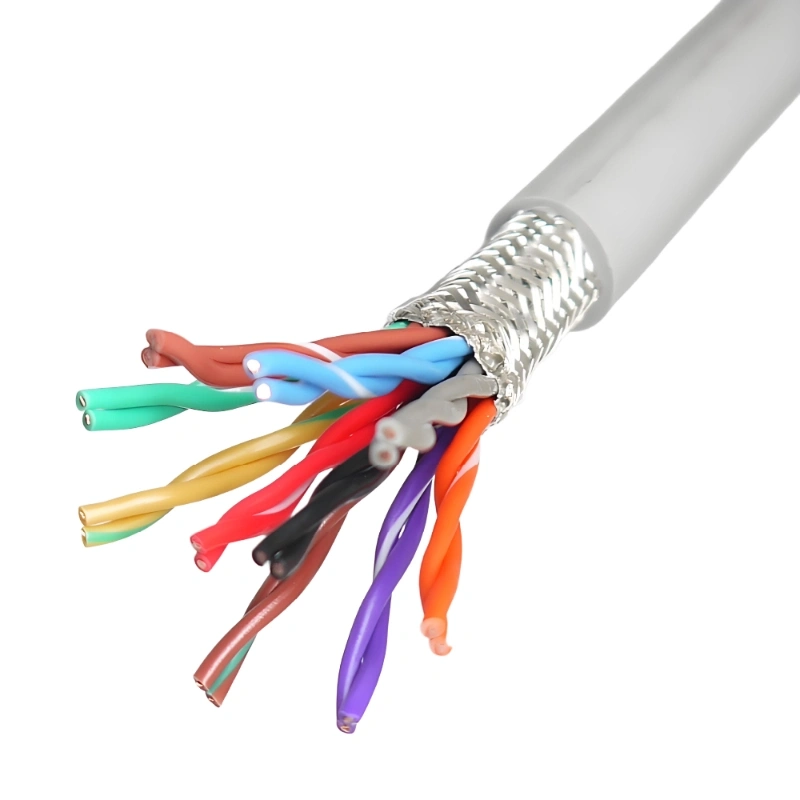
- Electrical Communication Cables: Rely on metal conductors (primarily copper) to transmit electrical signals. Common types include Twisted-Pair Cables (like Cat5e, Cat6, Cat7 Ethernet cables) and Coaxial Cables (once widely used for cable TV, now more common in specific RF applications). They use complex twisting and shielding to combat electromagnetic interference.
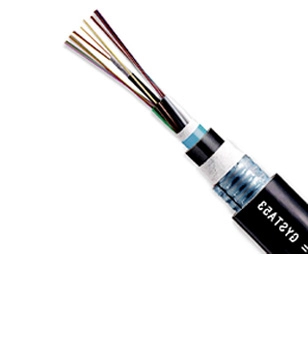
- Optical Communication Cables: Utilize glass or plastic fibers to transmit data as light pulses. Fiber optic cables are the undisputed backbone for today’s long-distance, high-capacity communication, categorized into Multimode Fiber (suited for short-range, high-capacity intra-data center links) and Single-mode Fiber (used for long-haul transmission in metro and backbone networks).

02 Technological Evolution: The “Shift” and Convergence from Copper to Fiber
The development of communication cables is a history of pursuing higher bandwidth and longer distances.
- Continuous Evolution of Copper Cables: Despite competition from fiber, copper cables remain irreplaceable for the last hundred meters of access (e.g., building cabling, device connections) and specific short-range high-speed applications (like inter-server connections within data centers). The latest Category 8 twisted-pair cables can support speeds up to 40Gb/s, relying on enhanced shielding and higher twist densities.
- Revolutionary Advantages of Fiber Optics: Fiber optics, with their near-limitless bandwidth potential, extremely low signal attenuation, and complete immunity to electromagnetic interference, form the foundation of modern communication networks. Technologies like Wavelength Division Multiplexing (WDM) exponentially increase capacity by transmitting multiple light signals simultaneously on different wavelengths through a single fiber.
- The Field of Optical-Electrical Convergence: In real-world networks, fiber handles high-speed backbone transmission while copper manages flexible end-point access, working together through media converters. New solutions like Fiber-to-the-Room (FTTR) are continuously extending the advantages of fiber closer to end-users.
03 Key Performance Metrics: How to Measure the “Quality” of Communication Cables
Selecting or evaluating communication cables requires attention to these core parameters:
- Bandwidth & Data Rate: The maximum signal frequency (MHz) and actual data speed (Gbps) a cable can support, directly determining how “wide the road” is.
- Attenuation: The weakening of signal strength during transmission. Lower attenuation allows for longer effective distances. Fiber attenuation is far lower than copper.
- Impedance & Return Loss: Impedance mismatches cause signal reflection (return loss), leading to distortion. This demands extremely high precision and consistency in cable manufacturing.
- Crosstalk: Signal interference between wire pairs or from external sources. Shielded cables effectively address this but at higher cost and installation complexity.
- Environmental Performance: Includes fire rating (e.g., Low Smoke Zero Halogen), moisture resistance, tensile strength, bend radius, etc., ensuring stable operation in various physical environments.
04 Standardization: The Cornerstone of Global Interoperability
The global application of communication cables relies on stringent and unified standards. Major standard bodies include:
- International Electrotechnical Commission / International Organization for Standardization (IEC/ISO): The ISO/IEC 11801 series defines global requirements for generic cabling.
- Telecommunications Industry Association / Electronic Industries Alliance (TIA/EIA): The widely adopted TIA/EIA-568 series is the standard for commercial building telecommunications cabling in North America and beyond.
- Institute of Electrical and Electronics Engineers (IEEE): The IEEE 802.3 (Ethernet) standards directly define the required cable performance for different speeds.
Strict adherence to these standards is prerequisite for ensuring interoperability between equipment from different vendors and achieving guaranteed network performance.
05 Application Scenarios: The Modern Life Woven by Communication Cables
Communication cables operate invisibly, enabling critical applications:
- Telecommunication Networks: From submarine cables connecting continents to ubiquitous Fiber-to-the-Home (FTTH) networks, they form the physical skeleton of the internet.
- Data Centers: The massive amounts of high-speed Direct Attach Copper (DAC) cables and fiber optic patch cords connecting servers and switches are the cardiovascular system of cloud computing.
- Smart Buildings & Homes: Structured Cabling Systems (SCS) integrate data, voice, and even some control signals, forming the foundation for building intelligence.
- Industrial Automation & IoT: Used to connect sensors, controllers, and machinery, requiring cables with high noise immunity, oil resistance, and flex endurance for industrial-grade durability.
- Mobile Communication: The feeder cables (a specialized coaxial type) for cellular base stations and the fiber networks used for fronthaul and backhaul are the unseen enablers of 5G/6G signal coverage.
06 Cutting-Edge Trends and Future Outlook
Communication cable technology continues to evolve rapidly, with key trends including:
- Higher Density & Pre-connection: To address the cabling challenges of hyperscale data centers, high-density fiber optic connectors and factory-pre-terminated end-to-end cabling systems are becoming mainstream, greatly simplifying installation and enhancing reliability.
- Deepening of Specialized Applications: Growing demand for specialty cables like high-speed data cables for autonomous vehicles, Optical Ground Wire (OPGW) for power utilities, and radiation/high-temperature resistant fibers for extreme environments.
- Intelligent Management: “Smart cables” integrated with electronic identification (eID) or fiber sensing technology can monitor link status, temperature, stress, and even physical intrusion in real time, enabling physical layer asset management and security monitoring.
- Sustainability: Growing focus on recyclable materials, low-energy production processes, and longer service life is driving the industry toward greater environmental responsibility.
As 6G begins to envision terahertz communication and quantum networks explore entirely new transmission media, the innovation journey of communication cables is far from over. They may forever remain hidden within walls, conduits, or beneath the ocean, but the pulses of light and electricity they carry will continue to define the boundaries and speed of our interaction with information. Every upgrade to these “information superhighways” quietly reshapes how we perceive the world.