

RVV Cable Explained: Flexible PVC Sheathed Cord — Type Codes, H05VV-F Equivalent & Sourcing Guide
Release time: 2026-10-08
Your requisition says “flexible cord, 2 × 1.5 mm², 300/500 V, PVC insulated, PVC sheathed”. The Chinese quotation comes back as RVV 2 × 1.5.
They are the same cable. RVV is simply the Chinese type designation — and once you can read the letters, you can check any quotation against any specification in seconds instead of guessing.
This guide covers what RVV cord actually is, how each letter maps to a construction layer, how it differs from RVVP / RVVB / RV / RVS, whether H05VV-F can be substituted directly, which conductor class you should specify, and the checklist worth locking down before you issue a purchase order. Every core count, cross-section, diameter, weight and current rating below comes from our real flexible cord data sheets.
1. What RVV Cable Is, in One Line
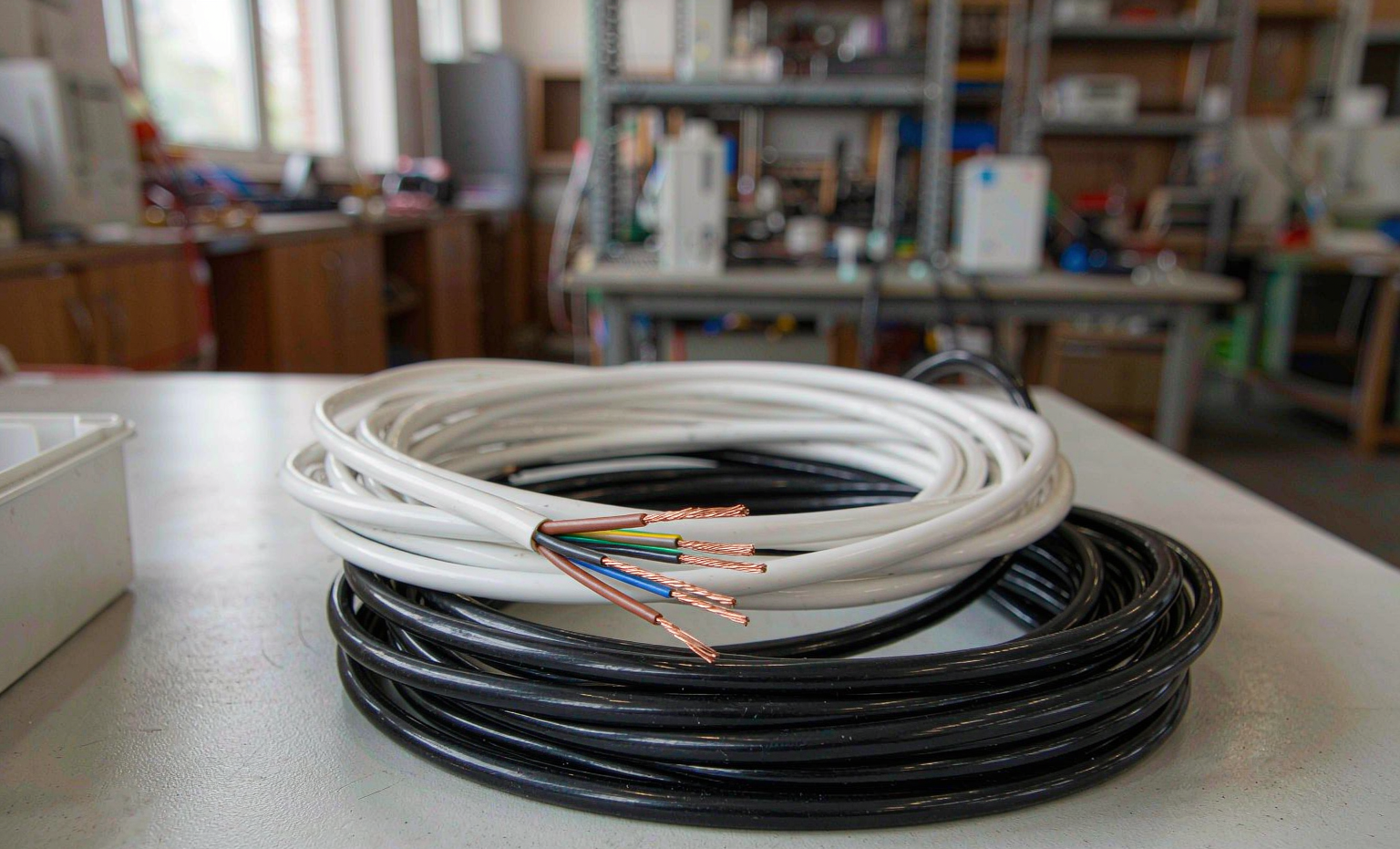
RVV = copper conductor, PVC insulated, PVC sheathed flexible cord, rated 300/300 V or 300/500 V, available from 0.5 to 10 mm² and 2 to 41 cores (2–24 cores in common use).
Three characteristics define where it belongs:
- It is a flexible cord, not a power cable. RVV uses Class 5 stranded copper, so it bends to a small radius and survives repeated flexing. Its natural home is equipment terminations and portable applications. A power cable such as YJV is for fixed installation, uses Class 2 stranded conductor, and is stiff by design.
- The voltage rating is 300/500 V — not 450/750 V. This is the number most often misapplied. RVV serves the low-voltage connecting section; it cannot replace a 450/750 V control cable (KVV) or a heavy-duty rubber cable (YC).
- Standard RVV has no armour and no screen. The PVC sheath is the only mechanical and moisture barrier. Where electromagnetic interference must be controlled, specify RVVP (braided screen); where heavier mechanical protection is needed, step up to an armoured or rubber-sheathed construction instead.
Our flexible cord range is manufactured to GB/T 5023-2008, which is equivalent to IEC 60227, and can also be produced to BS 6004 and DIN VDE 0281 requirements — or designed entirely to customer drawings and technical agreements.
2. Decoding the Type Code
The Chinese designation is a letter code in which each letter represents one construction layer. Learn this table and quotations stop being a translation problem:
| Type code | Construction | How to read it | Typical use |
|---|---|---|---|
| RV | Copper, PVC insulated flexible wire (single core, unsheathed) | R = flexible, V = PVC insulation | Appliance internal wiring, panel jumpers |
| RVV | Copper, PVC insulated, PVC sheathed flexible cord | R = flexible, V = PVC insulation, V = PVC sheath | Appliance cords, extension leads, indoor wiring |
| RVVB | Flat version of RVV | second B = flat (parallel) | Surface wiring on walls, flat runs behind trim |
| RVS | PVC insulated twisted pair flexible cord | S = twisted | Fire alarm broadcast, intercom, door entry |
| RVVP | PVC sheathed + braided copper screen | P = braided screen | Signal and control circuits in noisy environments |
| RVSP | Twisted pair + braided screen | S + P | Differential signals requiring cross-talk rejection |
| RVV-90 / RVV90 | 90 °C rated version | 90 = 90 °C maximum conductor temperature | High ambient temperature or continuous full load |
| ZR-RVV / ZC-RVV | Flame-retardant flexible cord | ZR / ZC = flame retardant | Bunched installation, fire-safety circuits |
| NH-RVV | Fire-resistant flexible cord | NH = fire resistant | Fire alarm and emergency lighting circuits |
| WDZ-RVV | Low smoke zero halogen, flame retardant | WDZ = LSZH | Metro, tunnels, occupied public spaces |
Two rules worth memorising:
- The first letter R means flexible, and it refers to the conductor construction (Class 5 stranded copper). That is the fundamental difference between RVV and KVV or YJV — change the letter and you change both the flexibility and the application.
- Screening (P) and twisting (S) are two different countermeasures. P wraps the whole cable to keep external interference out; S twists the pair so common-mode interference cancels itself. They can be combined (RVSP), and both can be omitted.
The mistake overseas buyers make most often: RVV and KVV both contain “VV”, and in both cases it means “PVC insulation + PVC sheath”. But the R versus K distinction decides how the cable may be used — RVV is a movable flexible cord; KVV is a fixed-installation control cable. When you read a quotation, check the first letter first.
3. Construction: What Each Layer Does
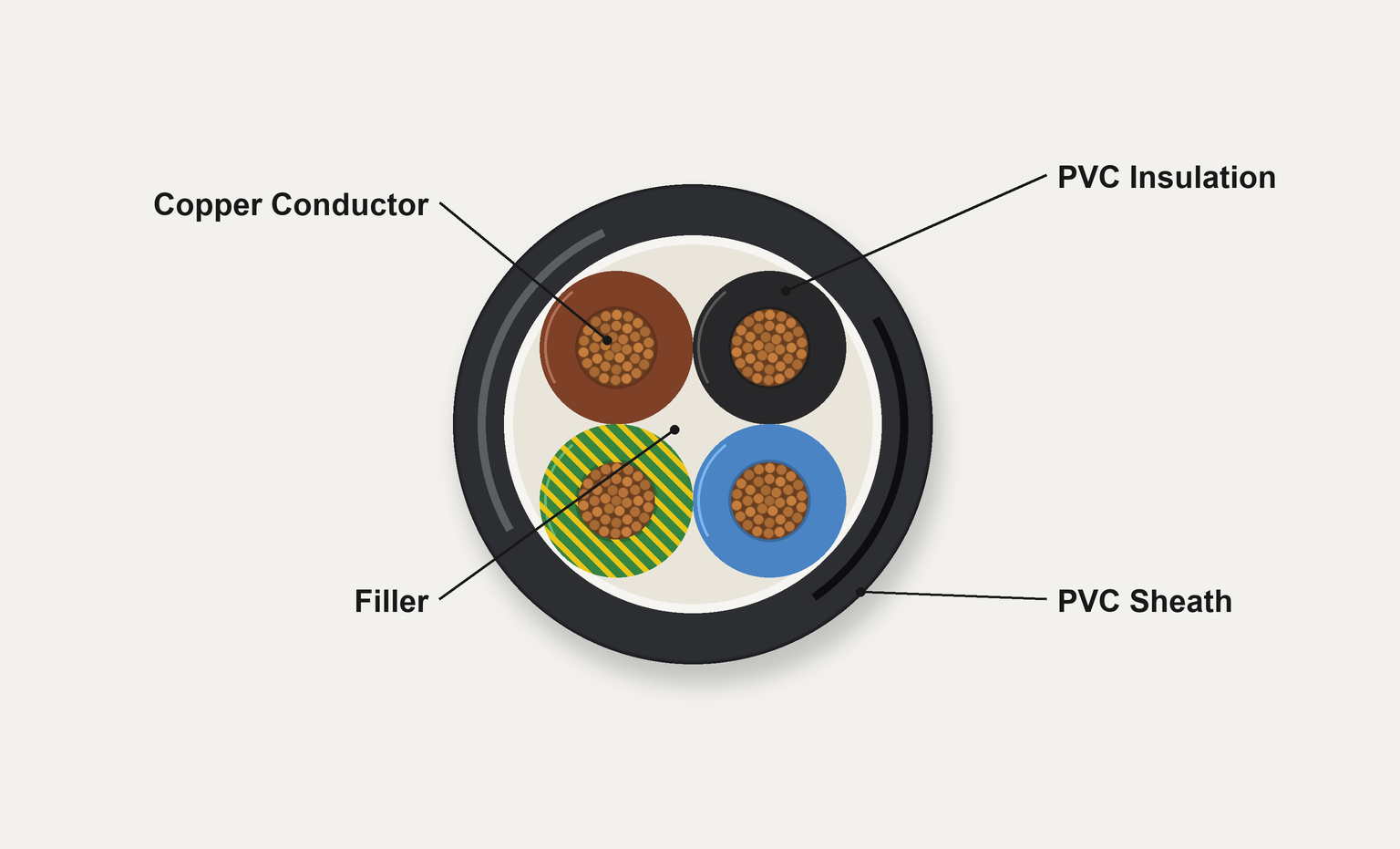
A standard RVV flexible cord has four layers, from the conductor outwards:
| # | Layer | Material | Function |
|---|---|---|---|
| 1 | Conductor | Stranded soft copper (Class 5, GB/T 3956) | Carries current; the fine stranding is what makes the cord flexible and able to survive repeated bending |
| 2 | Insulation | PVC | Core-to-core dielectric barrier; 70 °C standard, 90 °C heat-resistant version |
| 3 | Filler (multi-core) | Non-hygroscopic filler | Fills the laid-up core to a circular section so the sheath does not collapse |
| 4 | Sheath | PVC | Moisture, mechanical and light chemical protection; carries the surface marking (type, voltage, cross-section, standard) |
Why flexibility has to come from the conductor. A single 1.5 mm² solid copper wire work-hardens and cracks after a handful of bends. The same 1.5 mm² in Class 5 construction is made of dozens of fine strands, so the bending stress is shared across all of them and the cord can flex repeatedly at a small radius. That is the physical meaning of “flexible cord” — and the reason RVV is used for appliance leads, extension sockets and equipment terminations.
4. The RVV Family: Cords That Look Alike
| Type | Voltage | Construction | Screening | Flexibility | Main application |
|---|---|---|---|---|---|
| RV | 300/500 V | Single core, unsheathed | None | Good | Appliance internal wiring, panel jumpers |
| RVV | 300/500 V | Round, PVC sheathed | None | Good | Appliance cords, extension leads, indoor wiring |
| RVVB | 300/500 V | Flat, PVC sheathed | None | Good | Surface-mounted runs, flat routing |
| RVS | 300/300 V | Twisted pair, PVC sheathed | Fair | Good | Fire broadcast, intercom, access control |
| RVVP | 300/300 V | Round sheath + braided copper screen | Strong | Good | Signal and control circuits in noisy areas |
| RVV-90 | 300/500 V | 90 °C rated version | None | Good | High ambient temperature, continuous full load |
| YC / YZ | 450/750 V | Rubber sheathed, heavy duty | None | Excellent | Site work, portable tools, outdoor duty |
| KVV | 450/750 V | PVC sheathed, fixed installation | Model dependent | Poor | Panels, trays, tunnels — fixed control circuits |
In one line: movable equipment termination needing softness → RVV; interference present → RVVP; outdoor, oily or dragged on site → rubber-sheathed YC; fixed control wiring → KVV.
5. Standards Mapping: Can H05VV-F Substitute for RVV?
This is the question European and US buyers ask most. The answer: the construction class is very close, but certification and clause-by-clause applicability must be confirmed — never assume equivalence from the letters alone.
| Chinese type | European harmonised equivalent | Voltage | Cross-section | Key difference |
|---|---|---|---|---|
| 60227 IEC 52 (RVV) | H03VV-F | 300/300 V | 0.5–0.75 mm² | Light duty, small sections only |
| 60227 IEC 53 (RVV) | H05VV-F | 300/500 V | 0.75–2.5 mm² (some to 4 mm²) | The standard general-purpose cord |
| 60227 IEC 56 (RVV90) | H03V2V2-F (heat resistant) | 300/300 V | 0.5–0.75 mm² | 90 °C insulation |
| 60227 IEC 57 (RVV-90) | H05V2V2-F (heat resistant) | 300/500 V | 0.75–2.5 mm² | 90 °C insulation |
| Rubber sheathed (YC / YQ) | H05RR-F / H07RN-F | 300/500 / 450/750 V | 0.75 mm² and larger | Rubber sheath, outdoor and heavy duty |
Three points that matter commercially:
- H05VV-F is normally limited to 2.5 mm² (some standards to 4 mm²), while Chinese RVV is available up to 10 mm² and up to 41 cores. A drawing calling for “H05VV-F 6 mm²” maps onto a larger RVV construction, so verify by actual parameter rather than by type code alone.
- VDE / CE and CCC are different certification systems. Similar construction does not mean a transferable certificate. Export to the EU requires certification to the EN 50525 series; the Chinese market requires CCC. We can manufacture to GB, IEC, BS and DIN standards, but which standard and which certificate must be stated up front in the order.
- There is no RVV type in the North American system. The closest constructions are the SVT / SJT flexible cords of UL 62, but the construction class, temperature system and certification route all differ. UL certification must be carried out separately; “equivalent replacement” cannot be claimed on the strength of the type code.
6. Real Data: Type Matrix and Current Ratings
6.1 RVV type matrix
| Type | Rated voltage V | Cores | Nominal cross-section mm² | Max. conductor temperature |
|---|---|---|---|---|
| 60227 IEC 52 (RVV) | 300/300 | 2, 3 | 0.5–0.75 | 70 °C |
| 60227 IEC 53 (RVV) | 300/500 | 2, 3–24 | 0.75–6 | 70 °C |
| 60227 IEC 56 (RVV90) | 300/300 | 2, 3 | 0.5–0.75 | 90 °C |
| 60227 IEC 57 (RVV-90) | 300/500 | 2, 3, 4, 5 | 0.75–2.5 | 90 °C |
| RVV (JB/T 8734-2016) | 300/500 | 2–41 | 0.5–10 | 70 °C |
Standard core options: 4, 5, 6, 7, 10, 14, 16, 19 and 24 cores; as well as grouped arrangements of 4, 5, 6, 7, 12, 18, 27, 36, 48 and 60 cores.
Available derivatives on request: flame retardant, fire resistant, low smoke low halogen, and acid/alkali resistant.
6.2 Soft conductor reference data (RV single core, 300/500 V)
Use this table for preliminary sizing — cross-section, insulation thickness, overall diameter, weight, DC conductor resistance and current rating in air.
| Nominal cross-section mm² | Insulation thickness mm | Approx. overall dia. mm | Approx. weight kg/km | Max. DC resistance at 20 °C Ω/km | Current rating in air A |
|---|---|---|---|---|---|
| 0.5 | 0.6 | 2.1 | 8.4 | 39 | 13 |
| 0.75 | 0.6 | 2.4 | 11.4 | 26 | 17 |
| 1 | 0.6 | 2.5 | 14.0 | 19.5 | 19 |
| 1.5 | 0.7 | 3.0 | 19.9 | 13.3 | 25 |
| 2.5 | 0.8 | 3.6 | 30.4 | 7.98 | 34 |
| 4 | 0.8 | 4.2 | 45.5 | 4.95 | 45 |
| 6 | 0.8 | 4.8 | 64.0 | 3.3 | 58 |
| 10 | 1.0 | 6.2 | 109.9 | 1.91 | 80 |
| 16 | 1.0 | 7.3 | 170.2 | 1.21 | 111 |
| 25 | 1.2 | 9.0 | 255.6 | 0.78 | 155 |
| 35 | 1.2 | 10.2 | 347.4 | 0.554 | 192 |
| 50 | 1.4 | 12.0 | 472.5 | 0.386 | 232 |
| 70 | 1.4 | 13.8 | 654.6 | 0.272 | 298 |
| 95 | 1.6 | 16.1 | 894.2 | 0.206 | 362 |
| 120 | 1.6 | 17.7 | 1120.0 | 0.161 | 420 |
| 150 | 1.8 | 19.5 | 1359.4 | 0.129 | 484 |
| 185 | 2.0 | 21.6 | 1656.2 | 0.106 | 553 |
| 240 | 2.2 | 24.6 | 2177.5 | 0.0801 | 652 |
Important: the current rating depends heavily on installation method (in free air, in conduit, bunched), ambient temperature and how many cores carry current simultaneously. The values above are single-cable-in-air references. Apply derating factors for your actual installation; where several cores of the same circuit carry load together, reduce further on top of the single-core figure.
7. Where RVV Cord Is Used
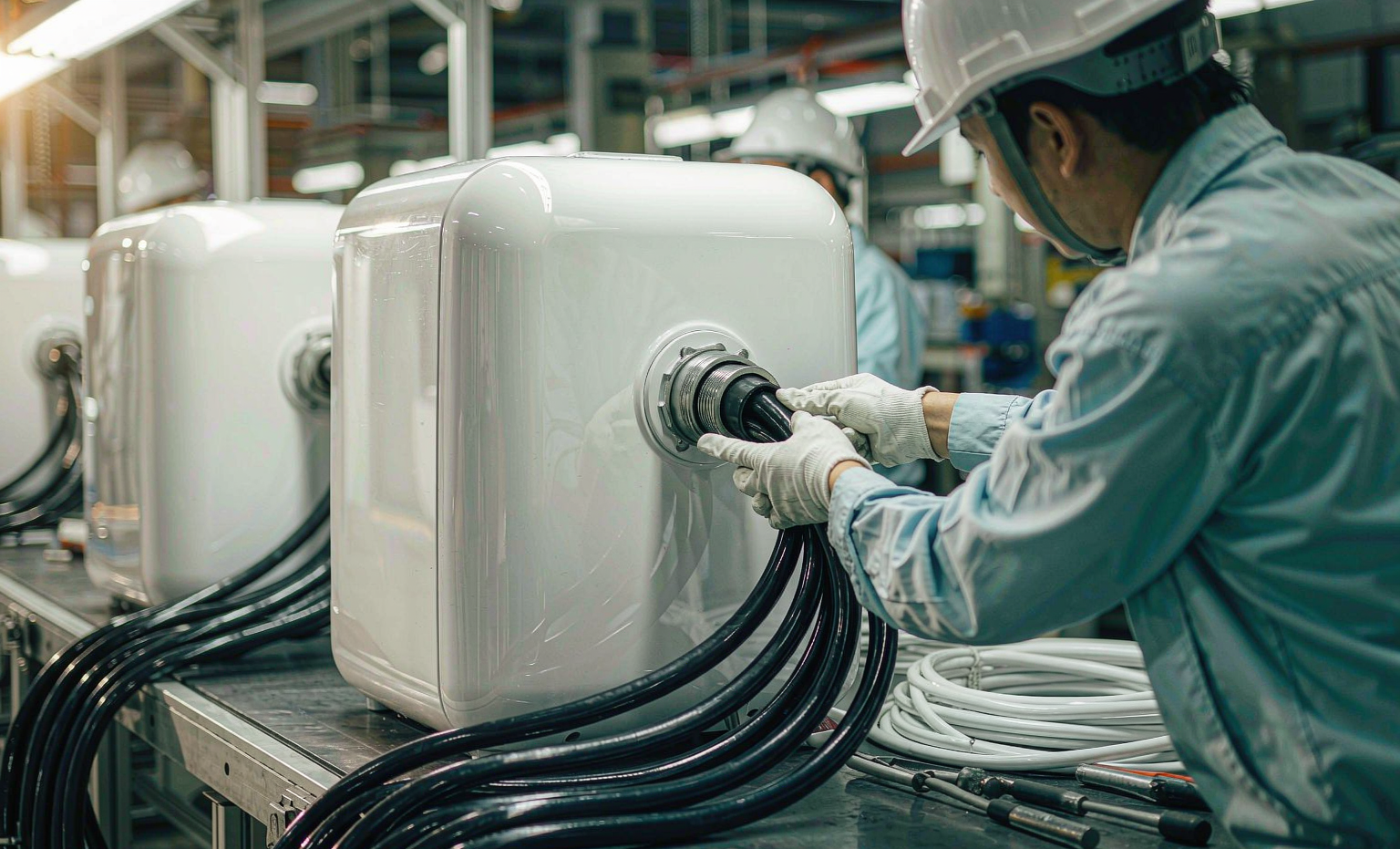
| Application | Why RVV fits | Typical sizes |
|---|---|---|
| Appliance power leads (washing machines, refrigerators, air conditioners, rice cookers, vacuum cleaners) | Flexible termination that survives repeated flexing and passes appliance approval | 3 × 0.75 / 3 × 1.0 / 3 × 1.5 mm² |
| Extension leads and power strips | Soft, abrasion-resistant cord; the internal wiring of the strip uses the same range | 3 × 1.0 / 3 × 1.5 mm² |
| Indoor distribution wiring (in conduit or trunking) | Easy to pull and dress around bends | 2 × 1.5 / 3 × 2.5 mm² |
| Smart home device supply (curtain motors, projectors, sensors) | Small-section flexible termination, discreet routing | 2 × 0.5 / 2 × 0.75 mm² |
| Security and low-voltage systems (intercom, access control, electric locks, readers, CCTV) | Combined power and signal, small multi-core construction | 4 × 0.5 / 6 × 0.5 mm² |
| Instruments and control units | Low-voltage control loops with close terminal spacing | 2–7 cores, 0.5–1.0 mm² |
8. Specification Checklist: Five Steps
Step 1 — Fix the voltage class. 300/300 V or 300/500 V? This decides whether you are buying IEC 52/56 or IEC 53/57. Light duty small sections take 300/300; general power leads take 300/500.
Step 2 — Fix cores and cross-section. Single-phase equipment normally needs 3 cores including earth. For control, count the signal ways and size the conductor on current rating and terminal capacity. Do not oversize “for safety” — the terminal may not accept it.
Step 3 — Fix the temperature class. High ambient temperature, or continuous operation near full load, calls for the 90 °C version (RVV90). Ordinary indoor duty is fine at 70 °C.
Step 4 — Decide on screening. Near large VFDs, motors or contactors, signal cores must be screened (RVVP / RVSP). Power cords generally do not need screening.
Step 5 — Fix the standard and certification. EU export requires CE certification to EN 50525 (H05VV-F series); China requires CCC to GB/T 5023; the US market requires separate UL 62 certification. Confirm this before placing the order — retrofitting certification costs lead time.
9. Four Common Misconceptions
Misconception 1: “RVV and H05VV-F are the same thing, so they swap freely.” The construction class is close, but the certification systems and cross-section limits differ. Substitution is valid only when voltage class, cores and section, temperature class and certification all line up.
Misconception 2: “It is all flexible cord — just look up the single-core current rating.” A multi-core cable carries less than a single-core of the same section, and the rating falls as more cores carry current simultaneously. Sizing on the single-core figure is a common cause of overheating on site.
Misconception 3: “300/500 V is the rating, so actual system voltage does not matter.” In 300/500 V, the first figure is the rated voltage conductor-to-earth and the second is conductor-to-conductor. On a 380 V three-phase system the phase-to-phase voltage (380 V) is below 500 V and phase-to-earth (220 V) below 300 V, so it is within rating — but any higher-voltage circuit must be re-specified.
Misconception 4: “RVV will do on site as a portable lead.” It will not. A PVC sheath is far behind a rubber sheath (YC / YZ) in oil, abrasion and weather resistance. On construction sites, outdoors, in oily areas or where the cable is dragged repeatedly, specify rubber-sheathed cable — otherwise the sheath will crack early.
10. FAQ
Q1: How do I tell RVV and KVV apart? Look at the first letter and the voltage. RVV is a 300/500 V flexible cord — movable, bendable, for equipment terminations. KVV is a 450/750 V control cable — fixed installation, stiffer conductor, for panels and trays. They are not interchangeable.
Q2: Which conductor class does RVV use? Class 5 soft copper (GB/T 3956), made of many fine strands. Class 6 versions with even higher flexibility are available on request for applications with more frequent flexing.
Q3: Can it be screened? Yes. Adding a braided copper screen gives RVVP (coverage typically ≥ 80%); twisted pair plus screen gives RVSP. The screen slightly increases diameter and weight, so allow margin when sizing conduit or glands.
Q4: How many cores can be supplied? Normally 2–24 cores; the GB RVV range goes up to 41 cores. More cores mean a larger overall diameter — check your conduit or terminal space.
Q5: Are flame-retardant and fire-resistant versions available? Yes. Flame retardant is ZR-RVV / ZC-RVV, fire resistant is NH-RVV, and low smoke zero halogen is WDZ-RVV. These are derivative characteristics — simply state them on the order.
Q6: What is the MOQ and lead time? Our product pages list a minimum order of 1 metre, so both sample quantities and full production orders can be handled. Lead time is confirmed against the specific specification and quantity.
11. About Us and Contact
We have manufactured cable for more than 25 years, with close to 30 product series, around 4,000 product types and 50,000+ specifications, supported by 3,000+ production and testing units. Our products are exported to more than 20 countries and regions. The company holds ISO 9001 / 14001 / 45001 / 50001 system certification, manufactures to GB, IEC, BS, DIN and ASTM standards, and carries CCC, CE, TÜV and UL product certification, with a first-pass finished-product inspection rate consistently above 98%.
For an RVV quotation, data sheet or sample, contact us directly:
- WhatsApp: +86 199 4242 4884
- Email: info@xijiangyuecable.com
- Website: https://www.xjycable.com
Send us your specification (type / voltage / cores × cross-section / colour / standard / quantity) and we will come back with a sizing recommendation based on your actual installation conditions, together with a formal quotation.