


RVS Cable Explained: The Twisted-Pair Flexible Wire — Structure, Family & Selection Guide
Release time: 2026-09-10
Intro: RVS cable is a familiar sight in fire alarm systems, public address (PA) networks, security intercoms, and home lighting control circuits. It looks like nothing more than two flexible wires twisted together — but the twisted-pair structure, flexibility, and installation behaviour all matter. This guide explains what RVS is, where it is used, and how it differs from RVV and RVB.
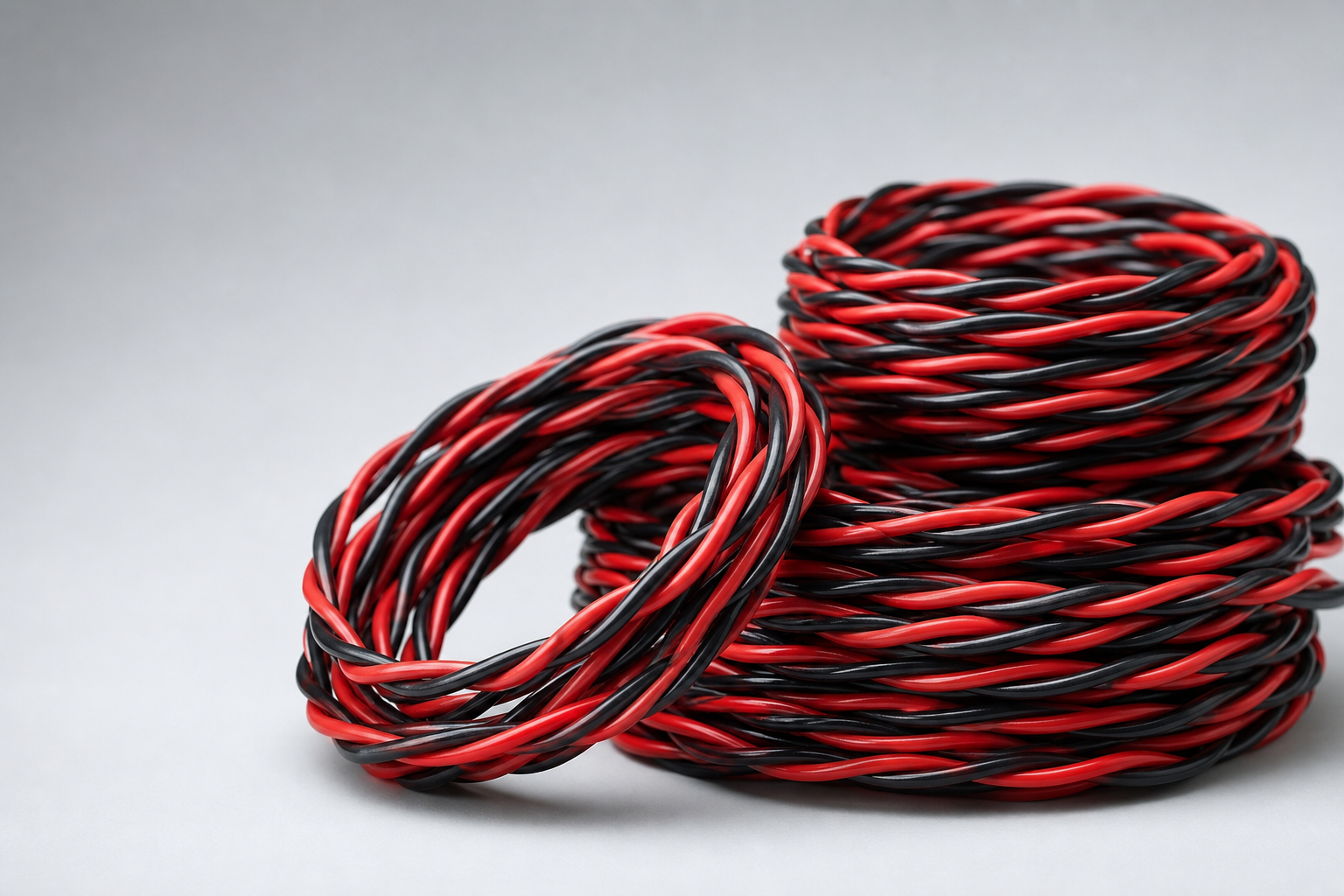
1. What Is RVS Cable?
RVS = copper conductor, PVC insulated, twisted-pair flexible wire (Chinese designation).
Decoding the name:
- R = flexible conductor (fine stranded copper, easy to bend)
- V = PVC insulation
- S = twisted type (two insulated cores twisted together — a twisted pair)
It belongs to the flexible connecting-wire family, made to standards such as JB/T 8734.3, with a common rated voltage of 300/300V and common sizes of 2×0.5, 2×0.75, 2×1.0, 2×1.5, 2×2.5 mm².
In one sentence: RVS is two individually PVC-insulated flexible copper wires twisted into a pair — with no outer jacket, it relies on conduit or trunking for protection.
2. Construction: What’s Inside RVS?
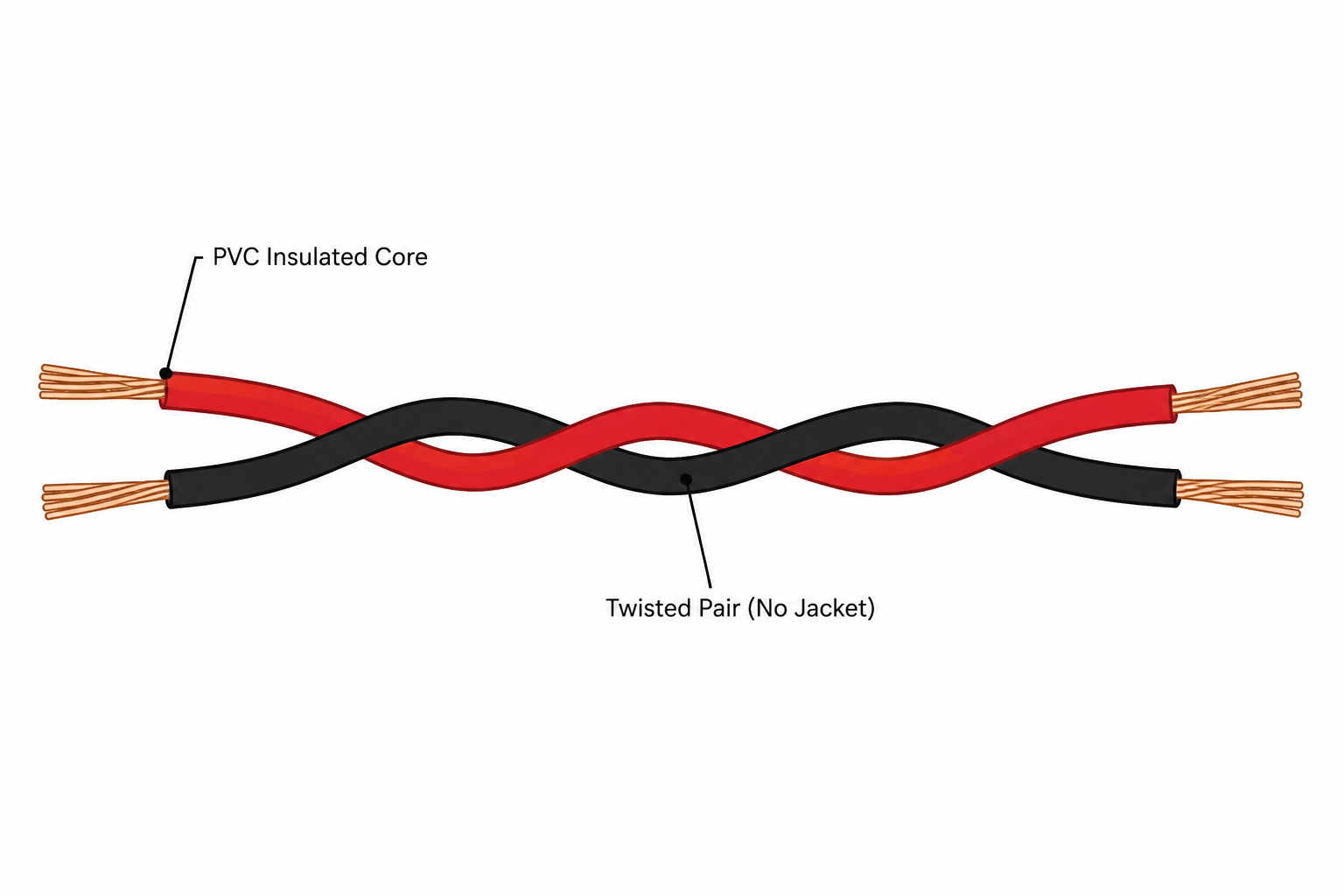
| Element | Description |
|---|---|
| Conductor | Fine stranded copper — flexible and easy to bend |
| Insulation | Each core is individually PVC insulated |
| Twisting | Two cores twisted symmetrically into a pair — the signature RVS structure |
| Jacket | None (the key difference from RVV) |
Why the twist? ① It helps suppress a degree of electromagnetic interference — useful for signal and fire-alarm bus applications; ② paired cores are easier to identify and route during installation.
3. The RVS Family: RV / RVB / RVV / RVVP
| Model | Construction | Typical Use |
|---|---|---|
| RV | Single-core flexible wire, no jacket | Equipment internal wiring, panel wiring |
| RVS | Two cores twisted, no jacket | Fire alarm / PA bus, dual-control lighting, signal transmission |
| RVB | Two cores parallel (flat), no jacket | Low-voltage connections, decorative lighting |
| RVV | Multi-core with PVC jacket | Power extension, applications needing mechanical protection |
| RVVP | RVV + braided screen | Interference-prone signal runs, security / CCTV |
Memory tip: S = twisted pair, B = flat parallel, the second V = adds a jacket, P = screened.
4. Where RVS Is Used
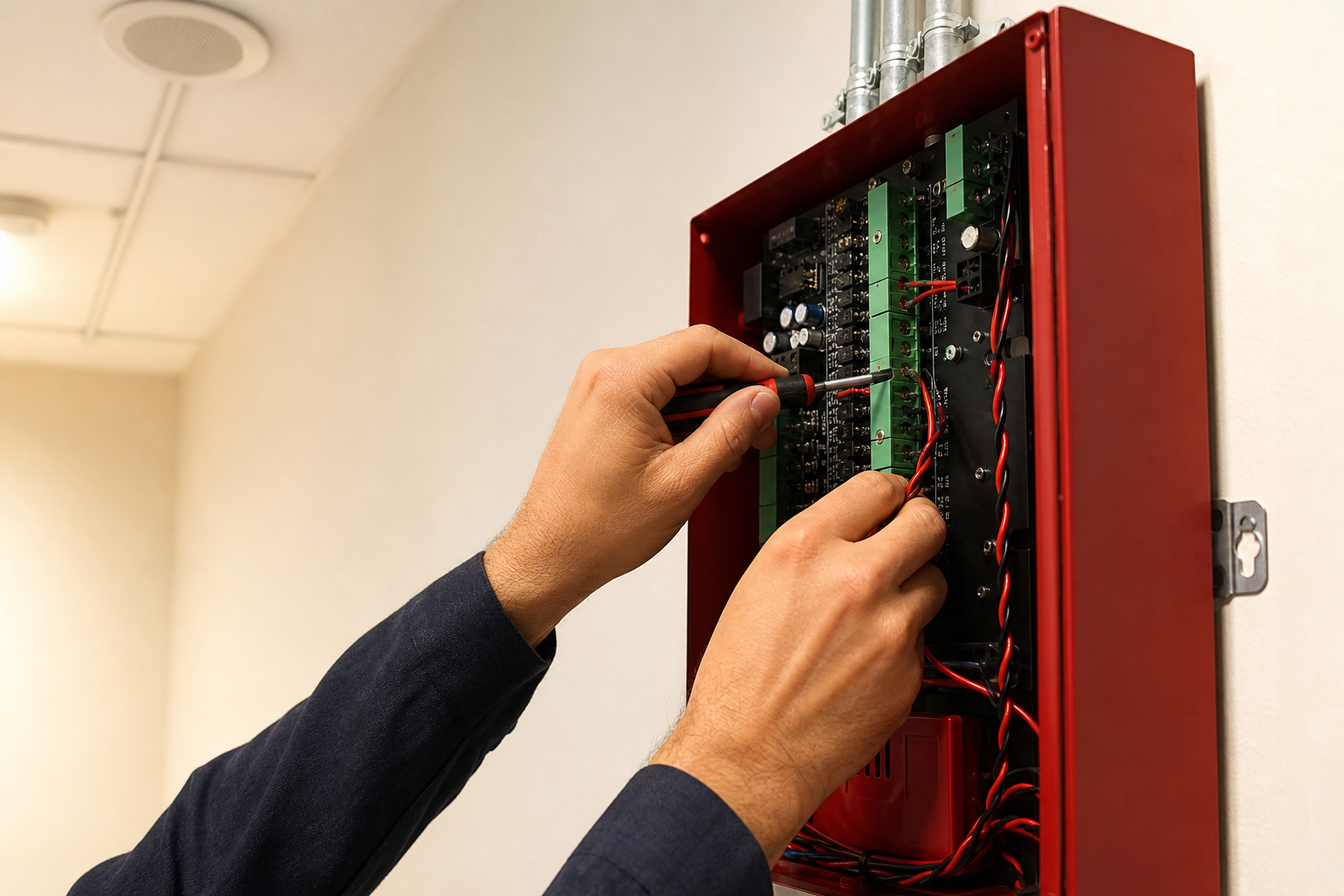
- Fire protection: fire alarm buses and fire PA circuits (typically ZR-RVS flame-retardant or NH-RVS fire-resistant types)
- Security & access control: intercom systems, CCTV signal wiring
- Public address: shopping malls, schools, stations
- Home lighting control: two-way / multi-way switch wiring (commonly 2×1.0 / 2×1.5 mm²)
- Low-voltage control: instrumentation signal and control circuits
5. 5 Points for Specifying RVS
- Match the application: choose RVS for twisted-pair signal and fire-alarm runs; choose RVV (jacketed) where mechanical protection or surface mounting is needed.
- Size by current: select the cross-section from load current and run length; for signal lines, consider voltage drop.
- Get the fire rating right: fire circuits require ZR-RVS (flame-retardant) or NH-RVS (fire-resistant) — standard RVS does not meet fire-safety requirements.
- Installation method: RVS has no jacket — install in conduit or trunking. Never direct-bury it, and avoid long-term outdoor exposure.
- Check export standards: RVS sits in the IEC 60227-5 flexible-cord family; confirm destination-market standards and certification (UL / EN, etc.) before shipping.
6. Common Mistakes & FAQ
- ❌ Using RVS as a main power line — it is a connecting wire, not suitable for high-power mains supply.
- ❌ Standard RVS in fire circuits — specify NH-RVS (fire-resistant) where circuit integrity under fire is required.
- ❌ Outdoor or direct burial — no jacket means no water or UV resistance; use conduit or a dedicated outdoor cable.
- ❌ Confusing RVS with RVV — RVV has a jacket and better mechanical strength; RVS is more flexible and twisted.
Q1: RVS or RVV — which should I choose?
A: For flexibility and twisted-pair signal/fire applications, choose RVS. For mechanical protection, surface mounting, or multi-core power, choose RVV.
Q2: Why is RVS twisted?
A: To suppress a degree of electromagnetic interference and to make paired routing and polarity identification easier.
Q3: Can RVS be used outdoors?
A: Not directly — without a jacket it offers no water or UV resistance. It must be protected in conduit.
Q4: Which RVS for fire protection projects?
A: ZR-RVS (flame-retardant) is common for alarm buses and PA circuits; where fire resistance is specified (fire PA, emergency systems), use NH-RVS — and always follow local fire-certification requirements.
Conclusion
Simple in construction yet irreplaceable in fire, PA, and low-voltage systems — spec RVS correctly by checking five things: application, cross-section, flame-retardant/fire-resistant rating, installation method, and certification.
Sourcing RVS / RVV / RVVP flexible wires, or need flame-retardant and fire-resistant types with export certification support? Contact our team for datasheets, samples, and custom options.

