


Intro: If you build solar projects or export PV cables, you cannot avoid the name PV1-F. It is the dedicated DC-side cable for photovoltaic systems — engineered to survive UV, rain, ozone, and temperature swings from -40°C to +90°C for 25 years. This guide explains what PV1-F is, why ordinary cables cannot replace it, and which certifications you need for export.
1. What Is PV1-F Solar Cable?
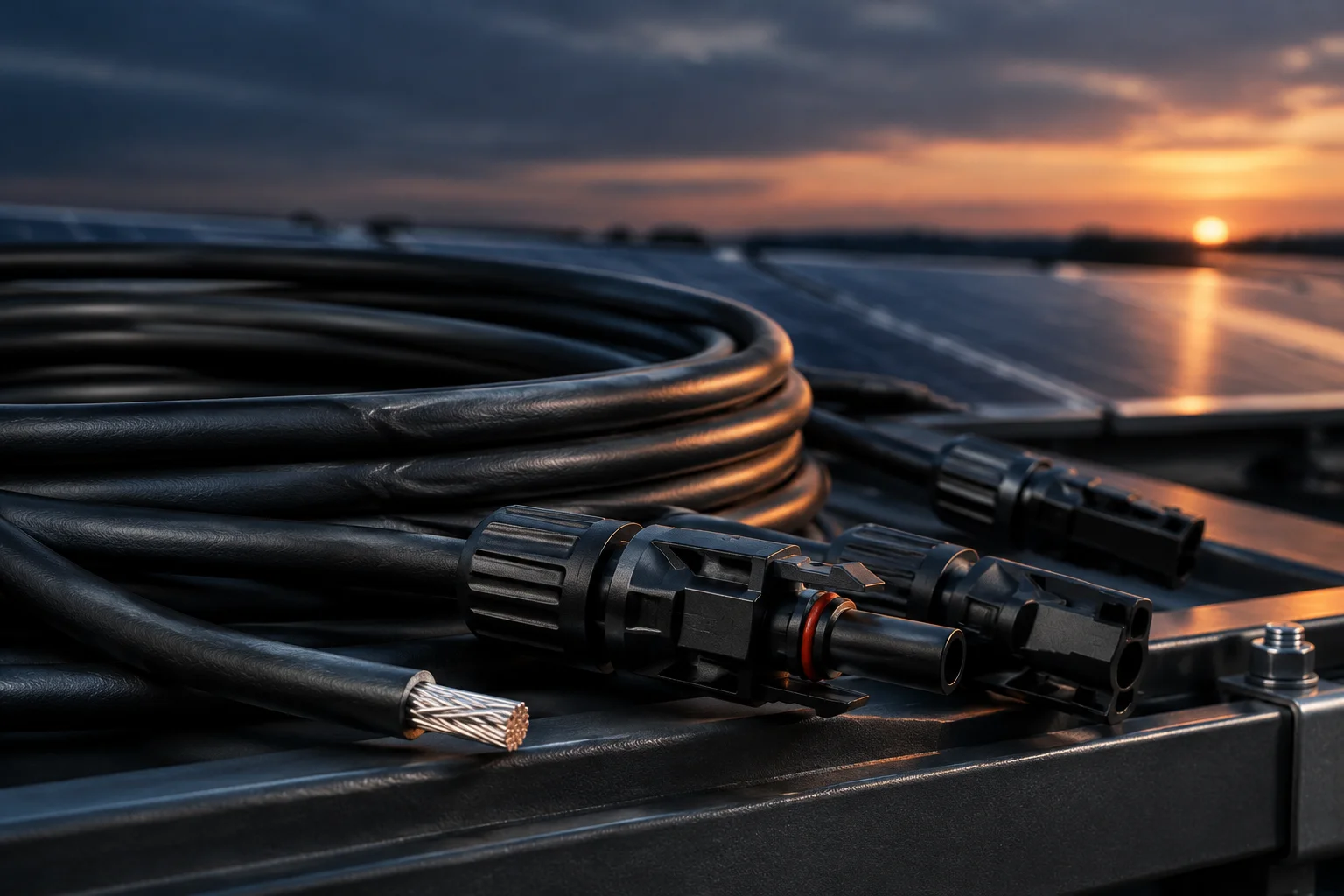
PV1-F is a dedicated photovoltaic (solar) cable, used for module-to-module connections and for DC runs from strings to combiner boxes and inverters.
- PV = Photovoltaic
- Single-core construction with cross-linked polyolefin (XLPO) insulation + XLPO sheath (double insulation)
It is not tied to a single national standard — it comes with a whole certification ecosystem. Check this table before exporting:
| Standard / Certification | Description | Main Market |
|---|---|---|
| TÜV 2PfG 1169 | The classic certification basis for PV1-F | Europe, Middle East, Asia-Pacific |
| EN 50618 (H1Z2Z2-K) | European solar cable standard, current mainstream | EU, UK |
| IEC 62930 | International standard for PV system cables | Global |
| UL 4703 (PV Wire) | North American PV wire standard | USA, Canada |
Typical rating: 1500V DC (0.6/1kV AC). Common cross-sections: 1.5–35 mm². Standard colours: black and red.
2. Why Does a PV System Need a Dedicated Cable?
Think of it as “25 years of outdoor punishment”:
| Environmental Stress | Effect on Cable |
|---|---|
| Ultraviolet (UV) radiation | Ordinary PVC jackets harden and crack |
| Ozone, humidity, heat | Accelerated insulation ageing, falling dielectric performance |
| -40°C to +90°C thermal cycling | Repeated expansion/contraction creates micro-cracks |
| High rooftop temperatures (near module backsheets) | Long-term heat embrittles insulation |
| Acid, alkali, salt mist (coastal / agricultural sites) | Jacket corrosion and damage |
Ordinary PVC cable used in these positions often starts cracking within 3–5 years — and failed insulation means leakage current, or worse, fire risk. A PV plant is designed to run 25 years or more. That is why PV1-F exists: to match the lifetime of the modules.
3. Construction: What’s Inside PV1-F?
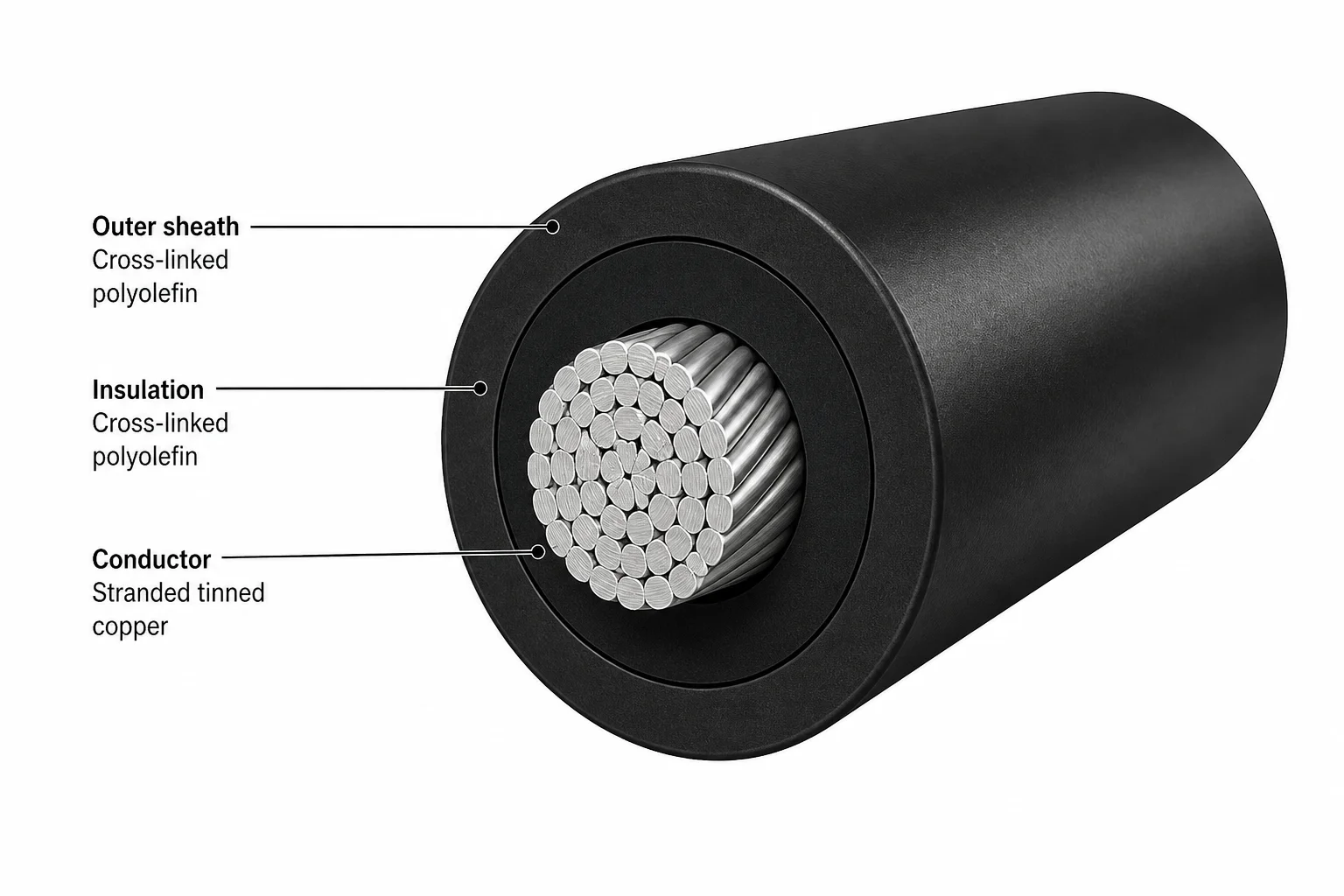
From inside out:
| Layer | Material | Function |
|---|---|---|
| Conductor | Stranded tinned copper | Anti-oxidation and corrosion resistance (especially coastal/humid sites), flexible |
| Insulation | Cross-linked polyolefin (XLPO) | 90°C rating, UV resistant, high dielectric strength |
| Sheath | Cross-linked polyolefin (XLPO) | Second layer: abrasion and weather resistance, halogen-free, flame retardant |
Double insulation is the PV1-F signature: both insulation and sheath use cross-linked polyolefin, formed into a three-dimensional network by electron-beam cross-linking — the fundamental reason it outlasts ordinary cable outdoors.
4. Key Technical Parameters
| Parameter | Typical Value |
|---|---|
| Rated voltage | 1500V DC (0.6/1kV AC) |
| Operating temperature | -40°C to +90°C (short circuit up to 120°C for 5 s) |
| Design lifetime | ≥ 25 years (matched to modules) |
| Flame retardance | IEC 60332-1, halogen-free |
| Common cross-sections | 1.5 / 2.5 / 4 / 6 / 10 / 16 / 25 / 35 mm² |
| Colours | Black, red (custom colours available) |
5. Typical Applications
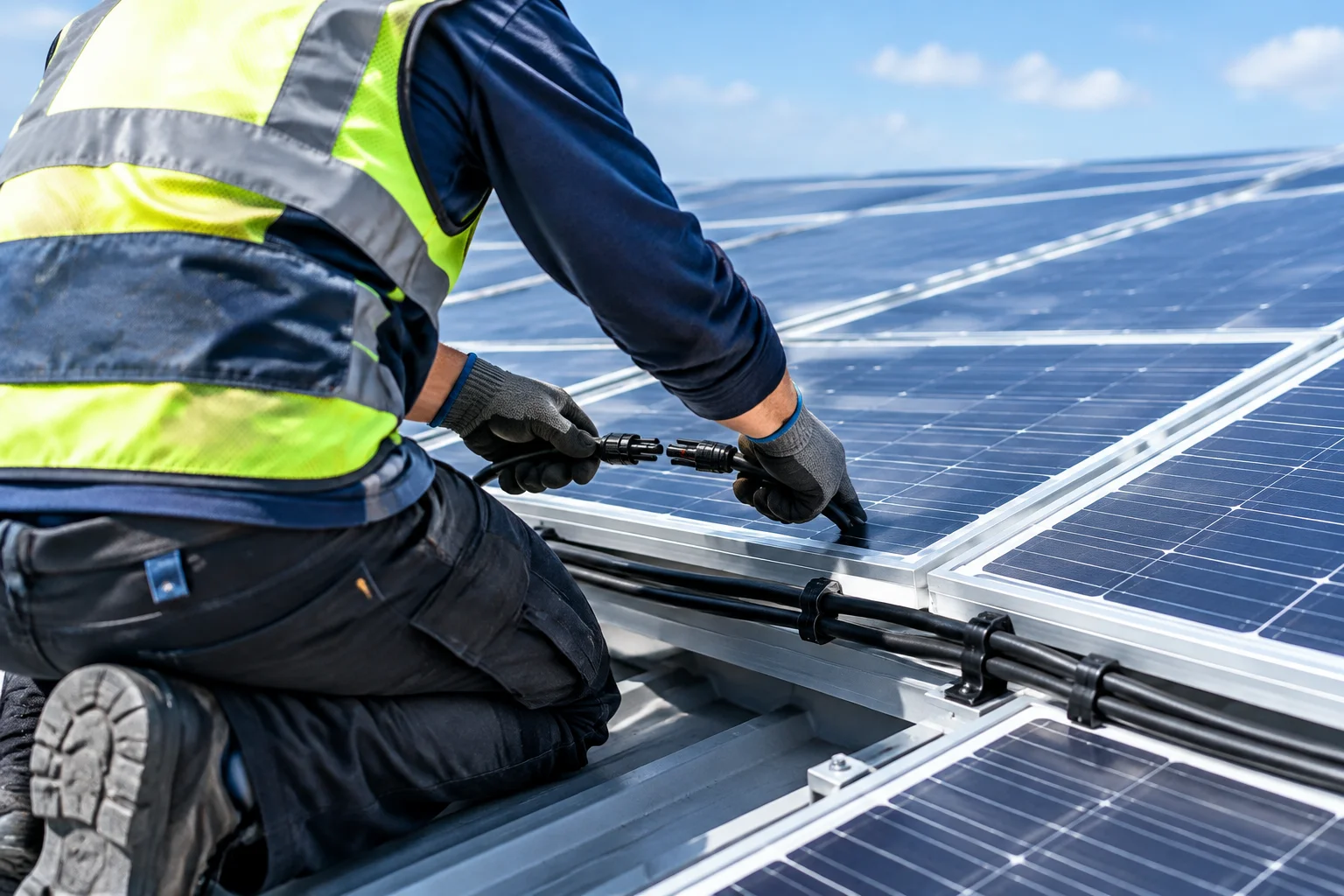
- Module-to-module jumper connections
- String-to-combiner-box and string-to-inverter DC runs
- Rooftop distributed systems and utility-scale ground-mount plants
- Tracking systems and BIPV (building-integrated PV)
- Agrivoltaics, floating solar and other humid / high-salt-mist environments
6. Five Selection Rules
- Certification decides the market: TÜV / EN 50618 for Europe, UL 4703 for North America, IEC 62930 for global projects
- Size by current AND voltage drop: on long strings, voltage drop hurts yield more than ampacity limits
- Temperature class: in hot regions (Middle East, Africa, South America) confirm the long-term temperature rating and derating
- Single-core or twin-core: twin-core (e.g. 2×4 mm²) speeds up installation
- Connector compatibility: mating tolerances and crimping process with MC4-type connectors must match
7. Common Mistakes
- ❌ Substituting ordinary RVV / YJV cable: outdoor service life collapses to months or a few years
- ❌ Choosing on price without certification: project acceptance, insurance, and financing can all be blocked
- ❌ Calculating current but ignoring voltage drop: long-string losses eat directly into energy yield
- ❌ Ignoring connector matching: cable-connector mismatch is one of the most common DC-side failure points
8. FAQ
Q1: What is the relationship between PV1-F and H1Z2Z2-K?
A: PV1-F is the type name under TÜV 2PfG 1169; EN 50618 defines the type H1Z2Z2-K. The technical requirements are close, and EN 50618 is the current European standard — for EU exports, certify to EN 50618 directly.
Q2: Why is the conductor tinned?
A: Tinning suppresses copper oxidation and corrosion, which matters most in coastal, humid, and ammonia-rich (livestock farm) environments.
Q3: Can PV1-F be used on the AC side?
A: Yes (0.6/1kV AC), though its typical role is the PV DC side.
Q4: Is the 25-year lifetime real?
A: It is a design lifetime derived from standard ageing tests and environmental conditions — valid only with correct selection and proper installation (avoid over-bending and water-trapping low points).
Conclusion
A PV plant is a 25-year asset, and the DC cable is its most easily overlooked risk point. Choosing the right PV1-F — the right standards and certifications, the right current and voltage-drop calculation, and the right connectors — is what allows the whole system to reach its design lifetime.
Need PV1-F samples, datasheets, or target-market certification support? Contact our technical team for selection advice and a project quotation.