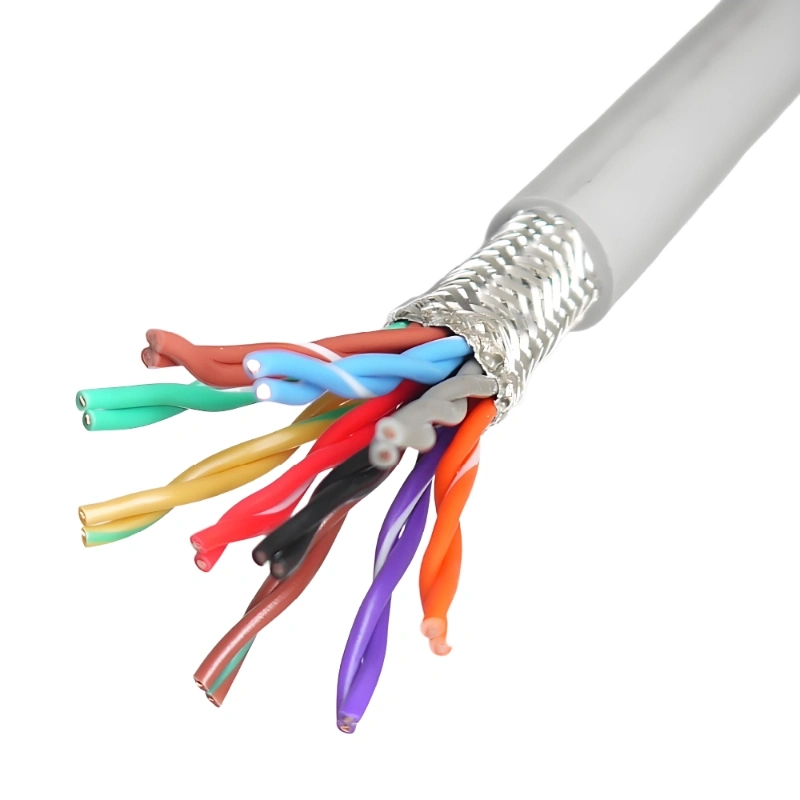


Mining Cable 101: Underground Power Cables Explained — Types, Construction & Certification
Release time: 2026-09-08
Intro: Mining cables are the “lifeline” of coal, metal, and other underground mines. They must survive dragging, flexing, impact, moisture, oil, and fire risk all at once. Whether you are a mining procurement engineer or an importer of mining cables, this guide explains why mining cables are different, how to read the type codes, and which certifications matter for export.
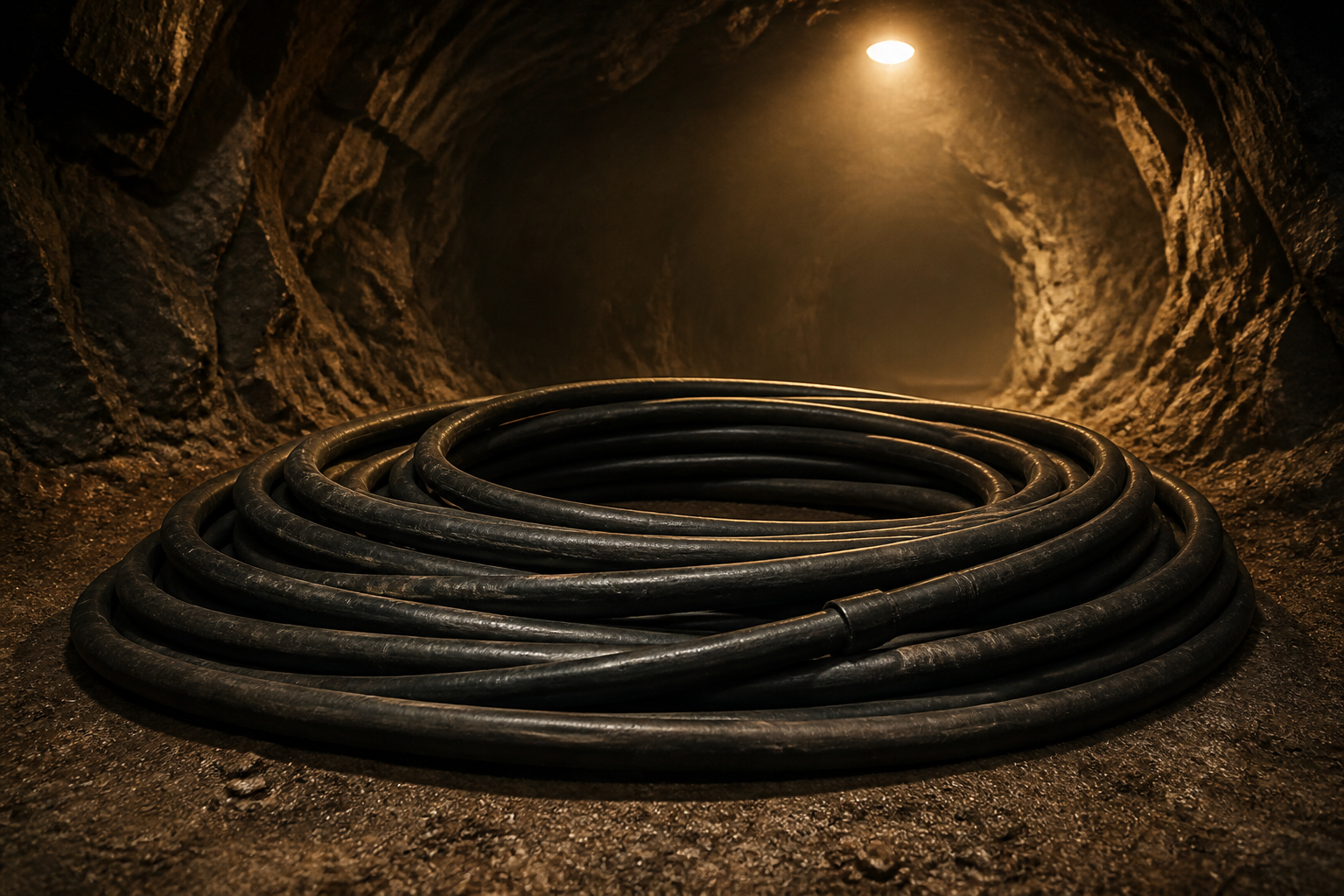
1. Why Are Mining Cables So “Special”?
Ordinary cables work in factories. Mining cables work in one of the harshest environments on earth: tight tunnels, falling rock, equipment that drags cables constantly, high humidity, oil contamination — and, in coal mines, the risk of methane gas and explosions.
A mining cable is therefore not “a thicker ordinary cable”. It is a safety-first special product:
| Hazard Underground | Cable Design Response |
|---|---|
| Constant dragging and flexing of moving equipment | Highly flexible stranded conductors + elastic rubber insulation/jacket |
| Falling rock, crushing, mechanical impact | Thickened abrasion-resistant rubber jacket (chloroprene CR / PCP) |
| Fire (methane + electrical spark) | Flame-retardant, non-propagating materials throughout |
| Moisture, oil, chemical attack | Sealed construction, oil- and water-resistant rubber compounds |
| EMI and leakage risk | Shielding + earth/ground-check cores for continuous ground monitoring |
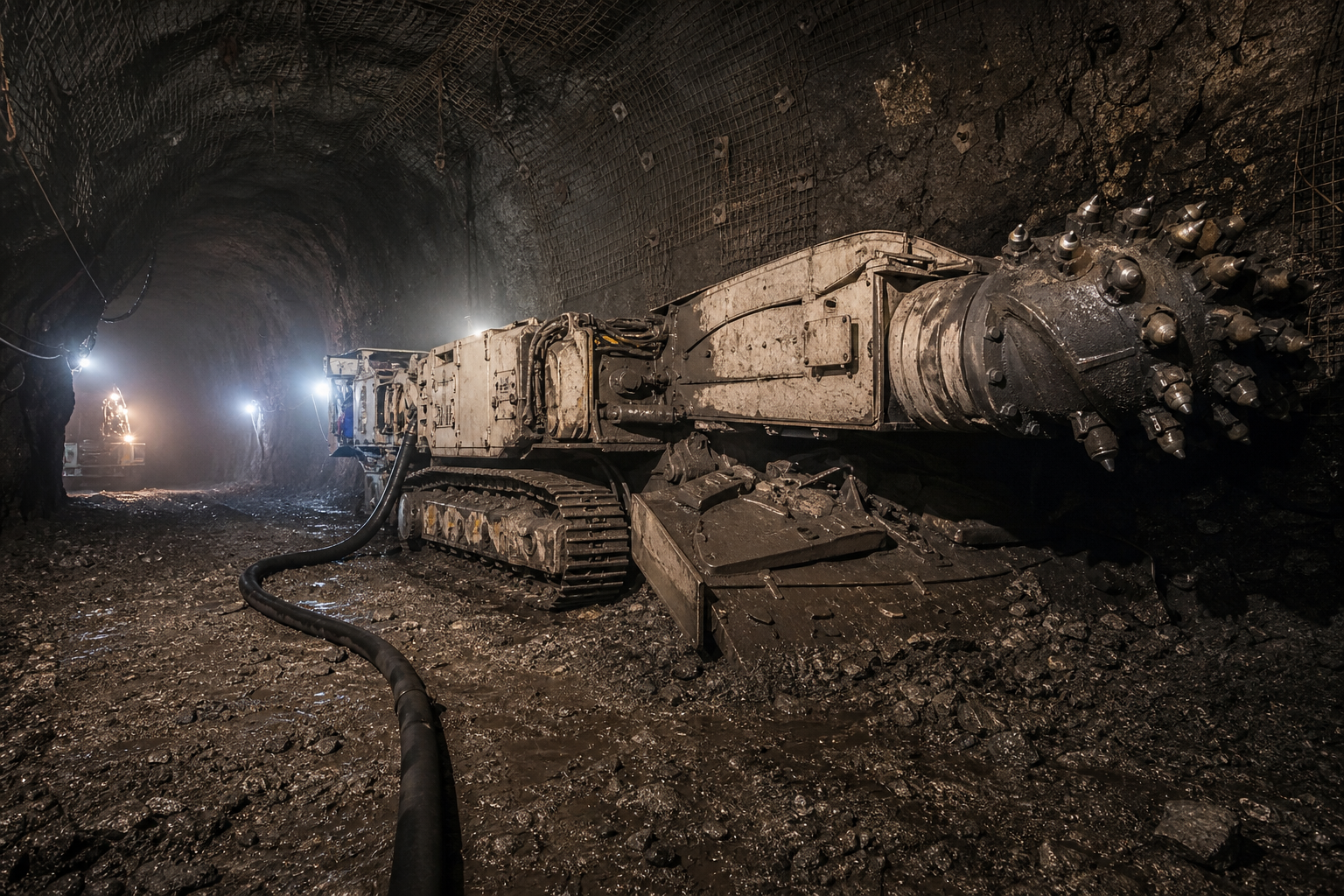
2. Main Types of Mining Cables
By application
- Mining trailing (flexible) cables — supply power to continuous miners, shearers, shuttle cars and shovels; built for dragging and flexing. The workhorse of mining cables.
- Mining power cables (fixed installation) — from underground substations to working faces; often XLPE-insulated (e.g., MYJV series in China).
- Mining control cables — control signals between equipment and monitoring systems.
- Mining communication cables — underground voice/data and safety monitoring (e.g., MHYV, leaky coaxial cable).
Reading Chinese type codes
| Letter | Meaning |
|---|---|
| U / M | Mining use (U: GB/T 12972 system; M: coal-mine MT 818 system) |
| Y | Mobile / rubber-sheathed |
| P | Screened (shielded) |
| C | Shearer / mining machine |
| J | Reinforced / ground-check core |
| Z | Drill cable |
Typical examples: UY / UYP (mobile rubber-sheathed trailing cable, UYP screened), UC / UCP (shearer cable), MYP (coal-mine mobile screened rubber cable), MYJV (coal-mine XLPE power cable, fixed), MHYV (mine communication cable).
Note: type letters differ between the GB/T 12972 and coal-mine MT 818 systems — always specify by the full type code and parameters on the safety certificate, never by letters alone.
Overseas equivalents
- North America: Type W / Type G portable power cables, SHD-GC shovel & dragline cables (GC = ground check)
- South Africa: the SANS 1520 trailing-cable family
- Australia: AS/NZS 1802 series
- International: IEC-based construction plus ATEX / IECEx explosion-protection certification where flammable gas is present
3. Construction: What’s Inside a Mining Cable?
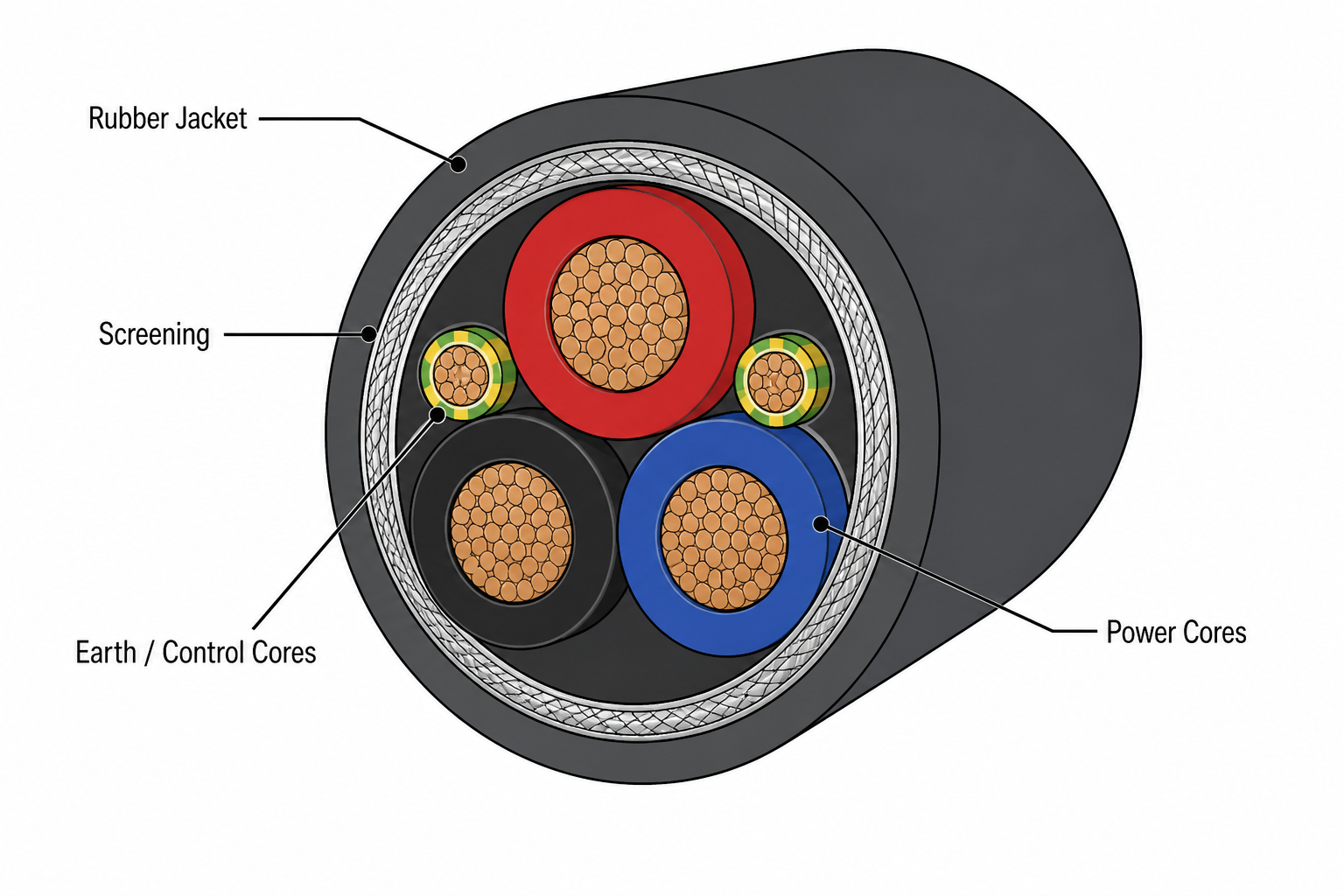
Using a typical screened mobile rubber-sheathed mining cable, from inside out:
- Power cores: finely stranded copper with EPR (ethylene-propylene rubber) or equivalent insulation — built for flexibility
- Earth cores: separate ground conductors, often oversized per code, for reliable fault-current path
- Control / ground-check cores: enable ground continuity monitoring — underground safety rules require alarm or trip if the earth circuit is broken
- Screening: metallic braid or semi-conductive layer — evens the electric field, blocks EMI, adds mechanical protection
- Outer jacket: flame-retardant, oil-resistant rubber (CR / PCP) — impact- and abrasion-resistant
4. Exporting Mining Cables: Certification Is the Entry Ticket
The biggest hurdle in mining cable is not price — it is certification. Without the certificate accepted by the destination country, the cable never enters a mine:
| Market | Key Certification / Standard |
|---|---|
| China | MA (coal-mine safety approval mark) + explosion-protection requirements |
| USA | MSHA (Mine Safety and Health Administration) acceptance |
| South Africa | SANS 1520 + SABS certification |
| Australia | AS/NZS 1802 |
| Gassy mines (global) | ATEX / IECEx explosion-protection |
4 steps to spec for export:
- Application — mobile equipment power or fixed installation? Shearer, shovel, or shuttle car?
- Voltage — 0.38/0.66 kV, 0.66/1.14 kV, or medium voltage 3.6/6 kV and above?
- Construction — screening, reinforcement, and ground-check cores needed? (Underground codes usually mandate ground monitoring.)
- Certification — confirm destination requirements (MSHA / SANS 1520 / AS/NZS 1802 / ATEX-IECEx) and build and test to that standard.
5. Common Mistakes & FAQ
- ❌ Substituting ordinary rubber cable for mining cable — banned underground: flame retardancy, ground monitoring and certification all fail. A serious safety hazard.
- ❌ Buying on price without certificates — “mining cable” without MA/MSHA/SANS approval cannot go underground, and liability is severe if anything fails.
- ❌ Using trailing cable for fixed installation (or vice versa) — designs are fundamentally different; misuse accelerates failure.
- ❌ Ignoring the ground-check loop — the earth circuit is a life-safety loop; a broken ground-check core must be fixed immediately.
Q1: Why is mining cable more expensive than ordinary cable?
A: Special materials (EPR insulation, chloroprene jackets), complex construction (screening, earth/ground-check cores), plus certification and testing — this is a “safety premium”.
Q2: Why must underground cable be flame-retardant?
A: Methane plus an electrical spark is a recipe for fire. Cable must be non-flame-propagating and low-smoke to buy people time to evacuate.
Q3: How long do mining trailing cables last?
A: It depends on drag frequency and maintenance. With proper care, quality trailing cable lasts years, but the underground environment is brutal — inspect jackets and cores regularly.
Q4: Which standard for South Africa / USA / Australia?
A: Follow the destination: SANS 1520 for South Africa, MSHA / Type W-G-SHD-GC for the USA, AS/NZS 1802 for Australia — manufacture and test accordingly and provide the certificates.
Conclusion
Mining cable is the category with the strongest “safety DNA” in specialty cable — it sells not just conductivity, but protection for people underground. Get the four essentials right — type code, construction, voltage, certification — and both procurement and export go smoothly.
Sourcing mining trailing cables, mine power cables, or export certification support (MA / MSHA / SANS / AS / IECEx)? Contact our team for datasheets, samples, and destination-market certification guidance.