


KVV Control Cable Explained: Type Codes, Construction, and How to Specify KVVP / KVVR / KVV22
Release time: 2026-09-30
Your requisition says one thing and the Chinese quotation says another. You wrote “control cable, 450/750 V, 7 × 1.5 mm², PVC insulated, PVC sheathed, screened” — the quotation comes back as KVVP 7 × 1.5.
They are the same cable. KVV is simply the Chinese designation, and once you can read the letters you can compare any quotation against any specification in seconds.
This guide covers what KVV control cable is, how each letter in the type code maps to a construction layer, when a screen is mandatory rather than optional, how KVV differs from RVV, YJV and rubber cable, how the standards map across markets, and the specification checklist worth locking down before you issue a purchase order. All type codes, core counts, cross-sections and service data below come from our real control cable technical data.
1. What KVV Control Cable Is, in One Line
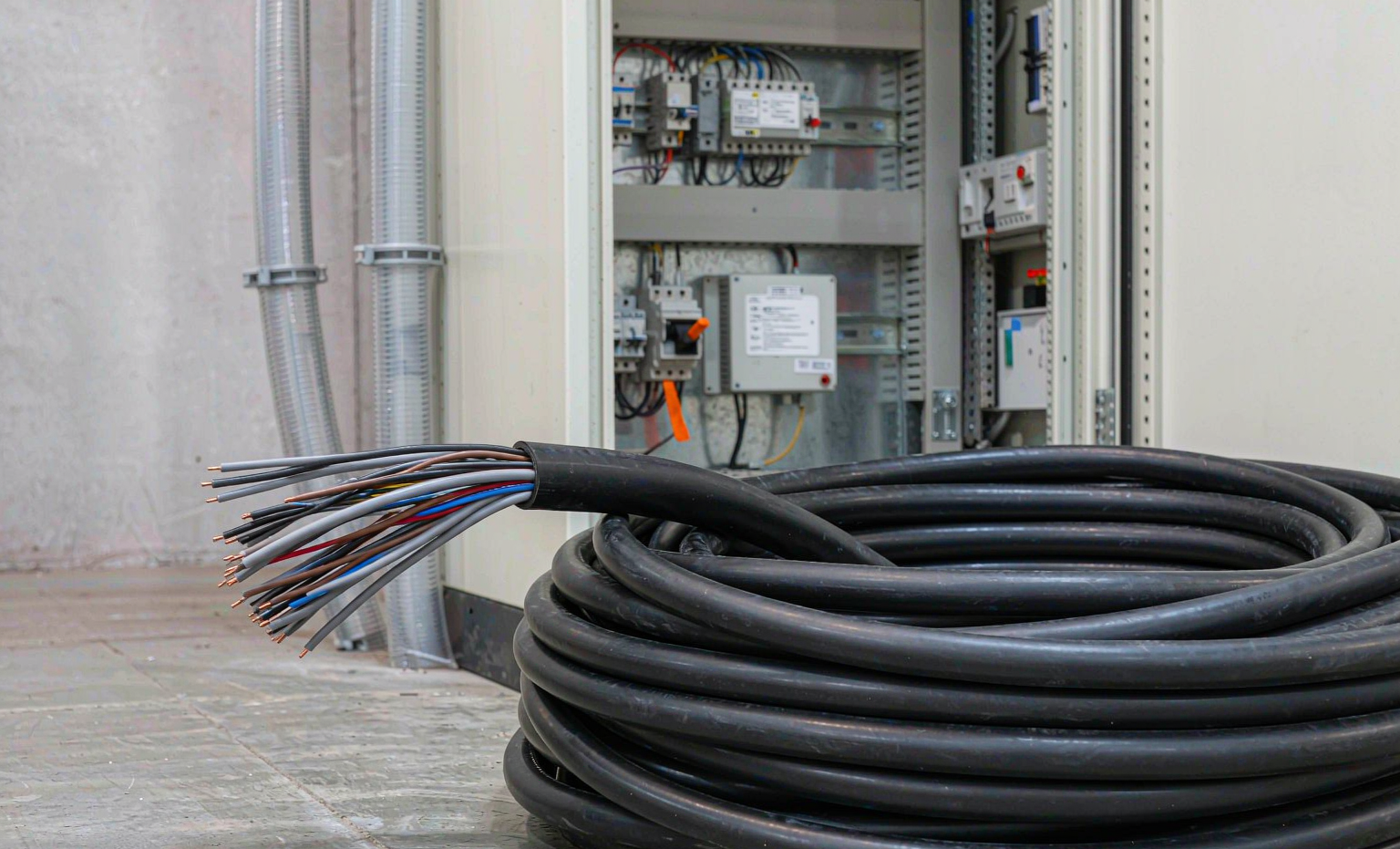
KVV = copper conductor, PVC insulated, PVC sheathed control cable, rated 450/750 V, available from 2 to 61 cores and 0.75 to 10 mm².
Three characteristics define where it belongs:
- Many cores, small cross-sections. A power cable is typically 3–5 cores at tens or hundreds of mm². A control cable is the opposite: 0.75–2.5 mm² cores, up to 61 of them in one cable. It carries switching and analogue signals, not power.
- Fixed installation. KVV is for fixed wiring — indoors, in cable trenches, ducts and trays. Where the cable must move or flex repeatedly, specify KVVR (flexible construction).
- Interference matters. Control circuits run at low signal levels (relay logic, 4–20 mA, digital inputs). Coupled noise from power cables causes nuisance tripping and false signals, which is why the KVV family includes a full set of screened variants (KVVP / KVVP2).
Our control cable products are manufactured to GB/T 5023, which is equivalent to IEC 60227. They can also be produced to ASTM, DIN and BS requirements, or designed and manufactured entirely to customer drawings and technical specifications.
2. Decoding the Type Code
The Chinese designation is a letter code in which every letter means one construction layer. Learn this table and quotations stop being a translation problem:
| Chinese code | Construction | How to read it | Typical use |
|---|---|---|---|
| KVV | Copper, PVC insulated, PVC sheathed control cable | K = control, V = PVC insulation, V = PVC sheath | Indoors, cable trenches, ducts — fixed installation |
| KVV22 | PVC insulated and sheathed, steel tape armoured | 22 = double steel tape armour | Cable trenches, direct burial, higher mechanical loads |
| KVVP | PVC insulated and sheathed, braid screened | P = braided copper screen | Fixed installation where interference must be controlled |
| KVVP2 | PVC insulated and sheathed, copper tape screened | P2 = copper tape screen | Higher screening performance, or screened + mechanical duty |
| KVVR | PVC insulated and sheathed, flexible | R = flexible (Class 5) conductor | Indoors, where the installation requires movement |
| KVVRP | Flexible, braid screened | R + P | Mobile duty plus interference control |
| KYJV | XLPE insulated, PVC sheathed control cable | YJ = XLPE | Higher temperature and longer service life |
| ZR-KVV / ZC-KVV | Flame-retardant control cable | ZR / ZC = flame retardant | Bunched installation, fire-safety circuits |
| NH-KVV | Fire-resistant control cable | NH = fire resistant | Fire alarms, emergency circuits |
| WDZ-KYJY | Low smoke zero halogen, flame retardant | WDZ = LSZH | Metro, tunnels, data centres |
Two rules worth memorising:
- K = control cable. Change the prefix and the family changes: YJV is a power cable, RVV is a flexible sheathed cord.
- The digit tells you the armour, the letter tells you the screen. `22` = double steel tape. `P` = braided copper screen, `P2` = copper tape screen. So KVVP2-22 is a copper-tape-screened, steel-tape-armoured control cable — screening and armouring are independent functions and can be combined.
The mistake overseas buyers make most often: armour (KVV22) is mechanical protection; a screen (KVVP / KVVP2) is electromagnetic protection. They are not substitutes. Direct burial needs steel tape; a VFD cabinet needs screening. When both conditions apply, specify the combined type.
3. Construction: What Each Layer Does
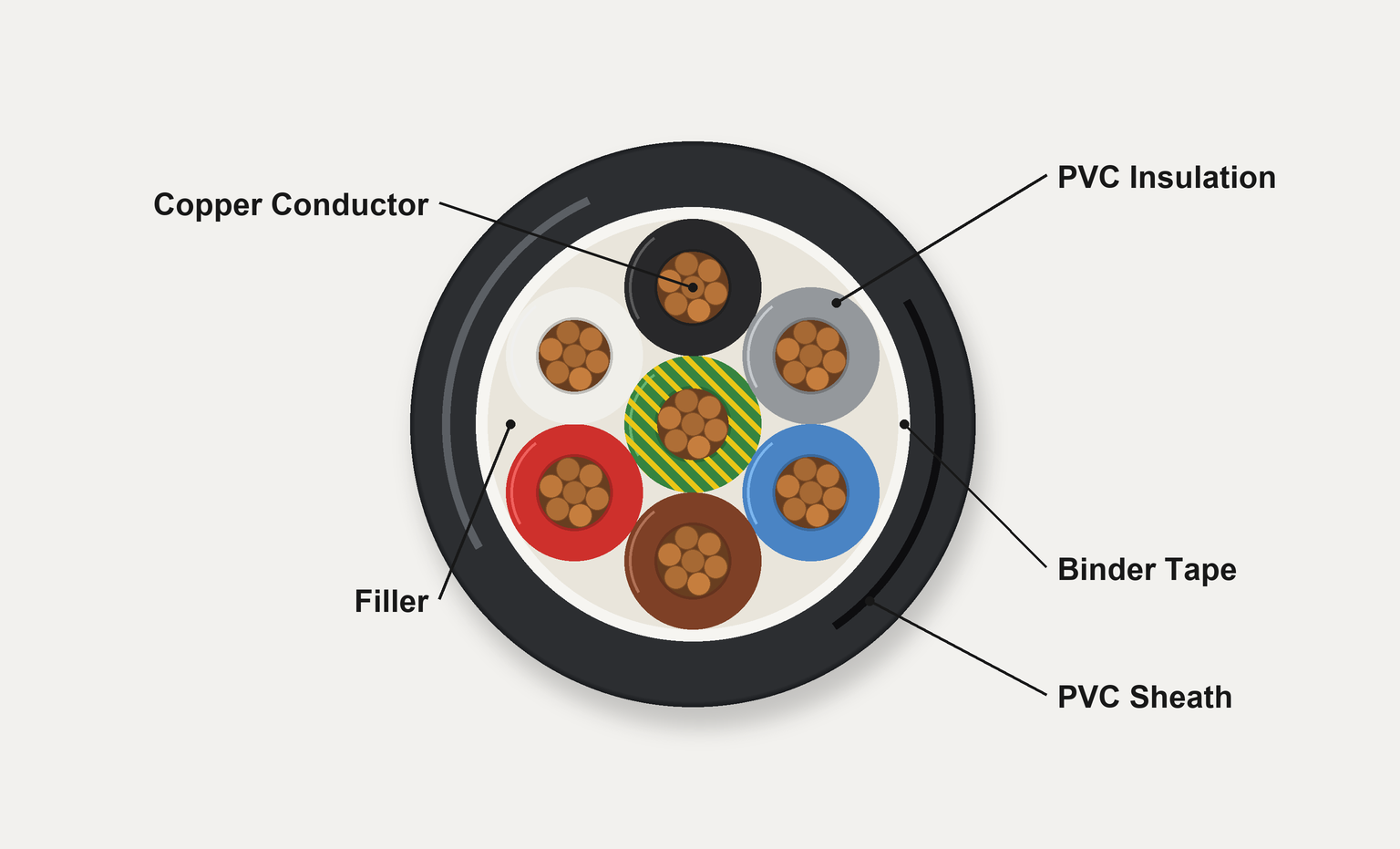
From the conductor outwards, a standard KVV control cable has five layers:
| # | Layer | Material | Function |
|---|---|---|---|
| 1 | Conductor | Stranded copper (Class 5 for flexible types) | Carries the signal; stranding keeps the cable workable at small bend radii |
| 2 | Insulation | PVC | Core-to-core dielectric; 70 °C continuous working temperature |
| 3 | Filler | Non-hygroscopic filler | Fills the laid-up core to a circular section so the sheath does not collapse |
| 4 | Binder tape | Polyester / non-woven tape | Binds the core and separates it from the sheath during extrusion |
| 5 | Sheath | PVC | Moisture, mechanical and corrosion protection; carries the surface marking |
Optional layers, added between the binder tape and the outer sheath:
| Optional layer | Position | What it solves |
|---|---|---|
| Braided copper screen (P) | Over the binder tape, under the sheath | Suppresses electromagnetic interference; coverage typically ≥ 80% |
| Copper tape screen (P2) | Over the binder tape, under the sheath | Denser screening, with some radial field and mechanical benefit |
| Steel tape armour (22) | Over the bedding, under the outer sheath | Withstands backfill, vehicle loading and rodent attack |
| Bedding (inner covering) | Between metal layer and core | Critical layer: keeps the armour or screen from indenting the insulation |
Why the bedding cannot be omitted. Steel tape is applied under tension. Sitting directly on the insulation, it leaves indentations — and under voltage stress and moisture ingress those indentations become the starting point of a breakdown. Bedding thickness is one of the fastest ways to tell a properly built control cable from a discounted one.
4. KVV vs RVV vs YJV vs Rubber Cable
These four families are frequently mixed up in the same enquiry. They are not interchangeable:
| KVV control cable | RVV flexible cord | YJV power cable | YC rubber cable | |
|---|---|---|---|---|
| Primary function | Signals and control commands | Small-power supply, appliance connection | Power distribution | Portable equipment supply |
| Rated voltage | 450/750 V | 300/500 V | 0.6/1 kV | 450/750 V |
| Core count | 2–61 | Typically 2–5 | 1–5 | 1–5 |
| Cross-section | 0.75–10 mm² | 0.5–6 mm² | 10–400 mm² | 1.5–400 mm² |
| Conductor | Class 1/2 (Class 5 for KVVR) | Class 5 flexible | Class 2 stranded | Class 5 flexible |
| Mobile duty | Fixed (except KVVR) | Yes | Fixed | Yes, including dragging |
| Screening available | Yes (P / P2) | Rarely | Armour instead | Rarely |
| Typical use | Control panels, instrumentation, automation lines | Domestic wiring, equipment leads | Distribution mains | Sites, mines, ports |
The quick test: ask three questions — does it carry power, how many cores, and does it need screening? Power → YJV or YC. Many cores and no power → KVV. Movement → the R variant. VFDs, servos or long signal runs → the P variant.
5. Standards Map Across Markets
The same cable is described under different standards in different markets. This table removes the mismatch between a drawing that says “IEC” and a quotation that says “KVV”:
| Market | Standard | Common designation | Notes |
|---|---|---|---|
| International | IEC 60227 (GB/T 5023 is equivalent) | PVC insulated control cable 450/750 V | The standard our control cable products are made to |
| China | GB/T 9330.2 | KVV / KVV22 / KVVP | The dedicated Chinese control cable series standard |
| Germany / Europe | DIN VDE 0250 series | PVC-Steuerleitung | European projects often raise VDE requirements |
| UK | BS EN 50525 (superseding BS 6500) | 450/750 V PVC insulated cable | Can also be manufactured to BS on request |
| North America | UL 2464 / UL 1277 (TC-ER) | Multi-conductor control / tray cable | “KVV” does not exist in North America — specify by construction, and confirm NEC Article 725 or 727 compliance |
For North American and Canadian buyers: do not send a type code. Send a construction description — “7 × 1.5 mm², 450/750 V, stranded copper, PVC insulated, PVC bedded, tinned copper braid screened (80% coverage), PVC sheathed, to IEC 60227” — and all ambiguity disappears. If the installation must comply with the NEC, also state the circuit class (Class 2/3 or Class 1) and whether PLTC or TC-ER listing is required.
6. Real Technical Data
The data below is taken from our control cable technical specification and can be used directly for selection and for checking a drawing.
Type comparison
| Type | Construction and conductor | Rated voltage | Cores | Cross-section (mm²) | Application |
|---|---|---|---|---|---|
| KVV | Copper, PVC insulated and sheathed | 450/750 V | 2–61 | 0.75–2.5 | Fixed installation indoors, in cable trenches and ducts |
| 2–14 | 4–6 | ||||
| 2–10 | 10 | ||||
| KVV22 | Copper, PVC insulated and sheathed, steel tape armoured | 450/750 V | 7–61 | 0.75–1.5 | Fixed installation indoors, in trenches and direct-buried ducts, where higher mechanical forces must be withstood |
| 4–61 | 2.5 | ||||
| 4–14 | 4–6 | ||||
| 4–10 | 10 | ||||
| KVVP | Copper, PVC insulated and sheathed, braid screened | 450/750 V | 2–61 | 0.75–2.5 | Fixed installation indoors, in trenches and ducts where interference must be controlled |
| 2–14 | 4–6 | ||||
| 2–10 | 10 | ||||
| KVVP2 | Copper, PVC insulated and sheathed, copper tape screened | 450/750 V | 4–61 | 0.75–2.5 | Fixed installation, trenches and direct-buried ducts, withstanding higher mechanical forces |
| 4–14 | 4–6 | ||||
| 4–10 | 10 | ||||
| KVVR | Copper, PVC insulated and sheathed, flexible | 450/750 V | 4–61 | 0.75–2.5 | Indoors, where the installation requires movement |
| KVVRP | Copper, PVC insulated and sheathed, flexible, braid screened | 450/750 V | 4–61 | 0.75–1.0 | Indoors, mobile duty with interference control |
| 4–48 | 1.5–2.5 |
Recommended core counts (orderable as standard): 2, 3, 4, 5, 7, 8, 10, 12, 14, 16, 19, 24, 27, 30, 37, 44, 48, 52 and 61 cores. Other counts can be manufactured to order.
Service performance
| Parameter | Value |
|---|---|
| Rated voltage | 300/500 V, 450/750 V, 0.6/1 kV (special applications up to 3.6/6 kV – 66 kV) |
| Long-term working temperature | Not exceeding 70 °C (PVC insulation) |
| Minimum ambient temperature when laying | Not lower than 0 °C |
| Minimum bending radius | Overall diameter ≤ 25 mm: ≥ 4D; overall diameter > 25 mm: ≥ 6D |
Note: the bending radii above are our product specification values. Where installation follows the general GB/T 9330 guidance, unarmoured control cable is commonly laid to ≥ 6D and armoured or screened types to ≥ 12D — confirm against the data sheet supplied with your delivery. We can issue it with the quotation.
7. Choosing a Screen: Braid (P) or Copper Tape (P2)?
This is the step most often skipped in control cable selection — and the one that causes the most commissioning problems.
| KVVP (braided) | KVVP2 (copper tape) | Un screened (KVV) | |
|---|---|---|---|
| Screen form | Tinned or bare copper braid, typically ≥ 80% coverage | Copper tape, overlapped | None |
| High-frequency interference | Good | Moderate — tape is less effective at high frequency | None |
| Low-frequency magnetic fields | Moderate | Better | None |
| Flexibility | Good | Stiffer | Best |
| Relative cost | Medium | Medium-high | Lowest |
| Typical use | Control and signal circuits near VFDs, servo and encoder lines | Severe interference environments, direct burial with mechanical duty | Basic relay logic, digital inputs |
Where a variable frequency drive is installed, screening is not optional. A VFD output is high-frequency PWM; common-mode noise couples from the motor cable into adjacent control cables and shows up as drifting analogue readings, dropped communications and nuisance tripping. Fix it with all three measures:
- Route separately. Keep control cables in a different tray or duct from power cables — at least 300 mm apart in parallel runs, and cross at right angles where they must cross.
- Use KVVP / KVVP2 and earth the screen at one end only (normally at the signal source) to avoid a circulating earth loop.
- Terminate the screen 360° with a metal cable clamp or EMC gland. A long “pigtail” drain wire destroys most of the screening performance.
8. Where KVV Control Cable Is Used
| Application | Why control cable is required | Typical sizes |
|---|---|---|
| Automation lines and machine control | High core counts, screening, panel and tray routing | KVVP 7×1.0, 12×1.0, 19×1.5 |
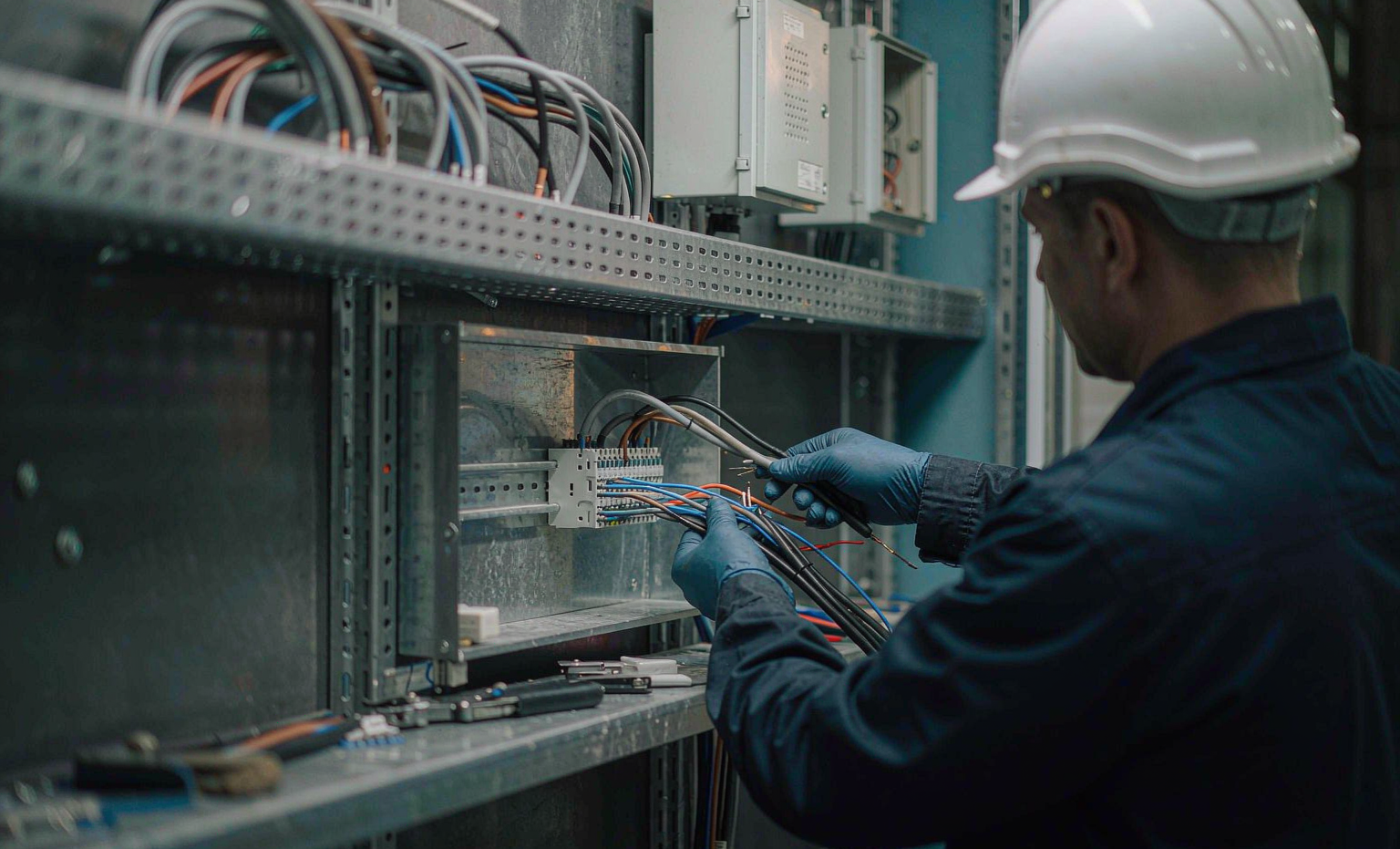
| Switchgear and control panel wiring | Fixed installation, dense termination, colour coding | KVV 2×1.0 – 24×1.5 |
| Power plant and substation control and metering circuits | Long signal runs, high immunity requirement | KVVP2 4×2.5, 7×2.5 |
| Building automation and fire alarm / interlock | Many circuits, flame-retardant or fire-resistant required | ZR-KVV, NH-KVV |
| Metro, tunnels and data centres | Enclosed spaces, low smoke zero halogen requirement | WDZ-KYJY |
| Direct-buried or trench control mains | Mechanical protection required | KVV22 7×1.5, 14×1.5 |
| Water treatment, chemical and cement plants | Damp, dusty, corrosive environment | KVVP2-22 range |
| Equipment with limited movement | Flexible construction needed | KVVR / KVVRP 4×1.0 – 12×1.0 |
9. Five-Step Selection Method
Step 1 — Fix cores and cross-sections. List every control and signal circuit from the schematic and add 20–30% spare cores — site modifications almost always add wiring. Size on circuit current and permissible voltage drop; 1.0–1.5 mm² covers most control circuits, but analogue loops over 100 m should be calculated separately.
Step 2 — Decide whether a screen is needed. VFDs, servo drives, soft starters, UPS systems or long analogue runs → screened. Pure digital inputs away from power cables → unscreened is acceptable. This is the single most direct trade-off between price and reliability.
Step 3 — Decide whether armour is needed. Direct burial, trenches, vehicle loading or mechanical risk → KVV22. Trays, ducts and panels → standard KVV.
Step 4 — Decide whether a flexible construction is needed. Fixed installation → KVV. Repeated bending during installation or slight equipment movement → KVVR / KVVRP. Note that KVVR is “flexible for installation”, not “designed for continuous dragging” — continuous flexing applications need a dedicated drag-chain cable such as TRVVP.
Step 5 — Lock down this specification checklist
- [ ] Number of cores and cross-section of each, including spares
- [ ] Rated voltage (450/750 V or 0.6/1 kV)
- [ ] Conductor material and class (bare / tinned copper, Class 1, 2 or 5)
- [ ] Insulation and sheath material (PVC / XLPE / LSZH)
- [ ] Screen type (none / braid / copper tape) and coverage requirement
- [ ] Armour (none / steel tape 22)
- [ ] Core identification (colour or number)
- [ ] Sheath colour and surface marking (metre marking, type, size, manufacturer)
- [ ] Flame-retardant / fire-resistant grade (ZR, ZC, NH, WDZ)
- [ ] Standard to be applied (IEC 60227 / GB/T 9330 / customer drawing)
- [ ] Installation method, ambient temperature and bending radius
- [ ] Delivery lengths and drum requirements, maximum single length
- [ ] Inspection documents (routine test report, third-party acceptance)
Sending this list to a supplier typically removes three to five rounds of clarification from the quotation.
10. Five Common Misconceptions
Misconception 1 — KVV can be used as a power feed. It cannot. Control cable cores are typically 0.75–2.5 mm² with limited current-carrying capacity, designed as control circuits. Using it to feed equipment causes overheating and excessive voltage drop. Use YJV / VV power cable instead.
Misconception 2 — Steel tape armour means no screen is needed. Armour is mechanical protection, not an electromagnetic screen. It has some effect on low-frequency magnetic fields but is largely ineffective against VFD-frequency noise. If interference must be controlled, specify KVVP or KVVP2 — and if mechanical protection is also required, specify the combined type.
Misconception 3 — Earthing the screen at both ends is better. Where power and control systems share a common earthing network, earthing at both ends creates a circulating earth loop that injects interference current. Screen at one end only, normally at the signal source, and leave the far end open or capacitively earthed according to the system earthing design.
Misconception 4 — More cores is always more economical. Every additional core increases the overall diameter, sheath compound consumption and drum weight, so unit cost is not linear. 20–30% spare cores is sensible; doubling the core count is waste — and larger diameters take more tray space and are harder to install.
Misconception 5 — “Copper conductor” means a good cable. Undeclared reduction of conductor cross-section, eccentric insulation, thin sheathing and recycled copper are all common in low-priced control cable. With small cross-sections, insulation eccentricity has a proportionally larger effect on insulation resistance. Ask for the routine test report covering conductor resistance, insulation thickness and sheath thickness — it is the single most effective incoming inspection document.
11. FAQ
Q1 — How much more does KVVP cost than KVV? The screen adds copper braid (or tape) and a braiding or taping operation, so KVVP is typically 10–25% more expensive at the same size, depending on core count and coverage requirement. If there is no significant interference source on site, unscreened KVV is the economical choice.
Q2 — What is the maximum number of cores? 61 cores as standard (0.75–1.5 mm²). More than 61 cores can be customised, but the overall diameter grows quickly — in most cases multiple cables or a bus system is the better answer.
Q3 — Can you supply LSZH or fire-resistant versions? Yes. LSZH corresponds to the WDZ-KYJY construction; fire resistance to NH-KVV. Please state the flame-retardant grade and the fire test standard required (e.g. IEC 60332, GB/T 19666, BS 6387).
Q4 — What is your minimum order quantity? Our MOQ on control cable is 1 metre, and samples and trial quantities are available.
Q5 — What is the lead time? Common sizes (KVV / KVVP 7×1.0, 12×1.0, 19×1.5) are held in stock. Special constructions (flame-retardant, fire-resistant, LSZH, custom core counts) are scheduled to order — send the list and we will confirm a firm delivery date.
Q6 — What inspection documents can you provide? The routine test report (conductor DC resistance, insulation resistance, high voltage test, dimensional check) and the type test report. Third-party inspection at the factory can also be arranged.
Q7 — How are cores identified? To the standard colour priority (green/yellow earth, light blue neutral, brown/black/grey phases) or by number. Custom identification can be produced to order.
12. Why Xijiangyue Cable
| Dimension | Data |
|---|---|
| Industry experience | More than 25 years in cable manufacturing |
| Product range | Nearly 30 series, around 4,000 models, 50,000+ specifications |
| Production and testing plant | 3,000+ units/sets, including a German TROESTER CCV 110 kV triple-extrusion XLPE line, a German SIKORA X-RAY 8000 eccentricity measuring system and a US HIPO partial discharge test system |
| Quality metric | First-pass finished-product inspection rate ≥ 98% |
| Management systems | ISO 9001 / ISO 14001 / ISO 45001 / ISO 50001; National Green Factory |
| Product certifications | CCC, Mining Product Safety Mark, CCS (classification society), TÜV, CE, UL and others |
| Export markets | 20+ countries and regions |
| Reference projects | Shanghai Stadium, Shanghai Metro, Xiaoshan Airport, Hangzhou Olympic Sports Centre, Shanghai International Convention Centre |
Control cable is one of our standard product families. The full KVV / KVV22 / KVVP / KVVP2 / KVVR / KVVRP range is produced to IEC, GB, DIN and BS standards, with core counts, cross-sections, screen types, sheath colours and surface marking customised to project requirements.
Request a quotation or a technical review
Send us your parameter list — cores and cross-sections, rated voltage, screening and armour requirement, installation method, quantity and destination port — and we will come back within one working day with pricing and lead time. If you would rather describe the installation, our engineers will assist with the selection.
Contact:
- WhatsApp / phone: +86 199 4242 4884 — chat on WhatsApp
- Email: info@xijiangyuecable.com
- Product page: PVC insulated shielded control cables, 1000 V multicores for industrial machinery
ANHUI XIJIANGYUE CABLE CO., LTD. 25+ years of cable manufacturing · exporting to 20+ countries · ISO 9001 / 14001 / 45001 / 50001

