

BV Cable Explained: China’s Most Popular Building Wire — Structure, Types & Buying Guide
Release time: 2026-09-24
Intro: BV cable is the most widely used wiring in Chinese building electrical systems — from home renovation circuits to commercial building distribution. If you are importing building wire from China, this guide explains what “BV” means, how it differs from BVR / BVV, and how to spec it correctly.
1. What Is BV Cable?
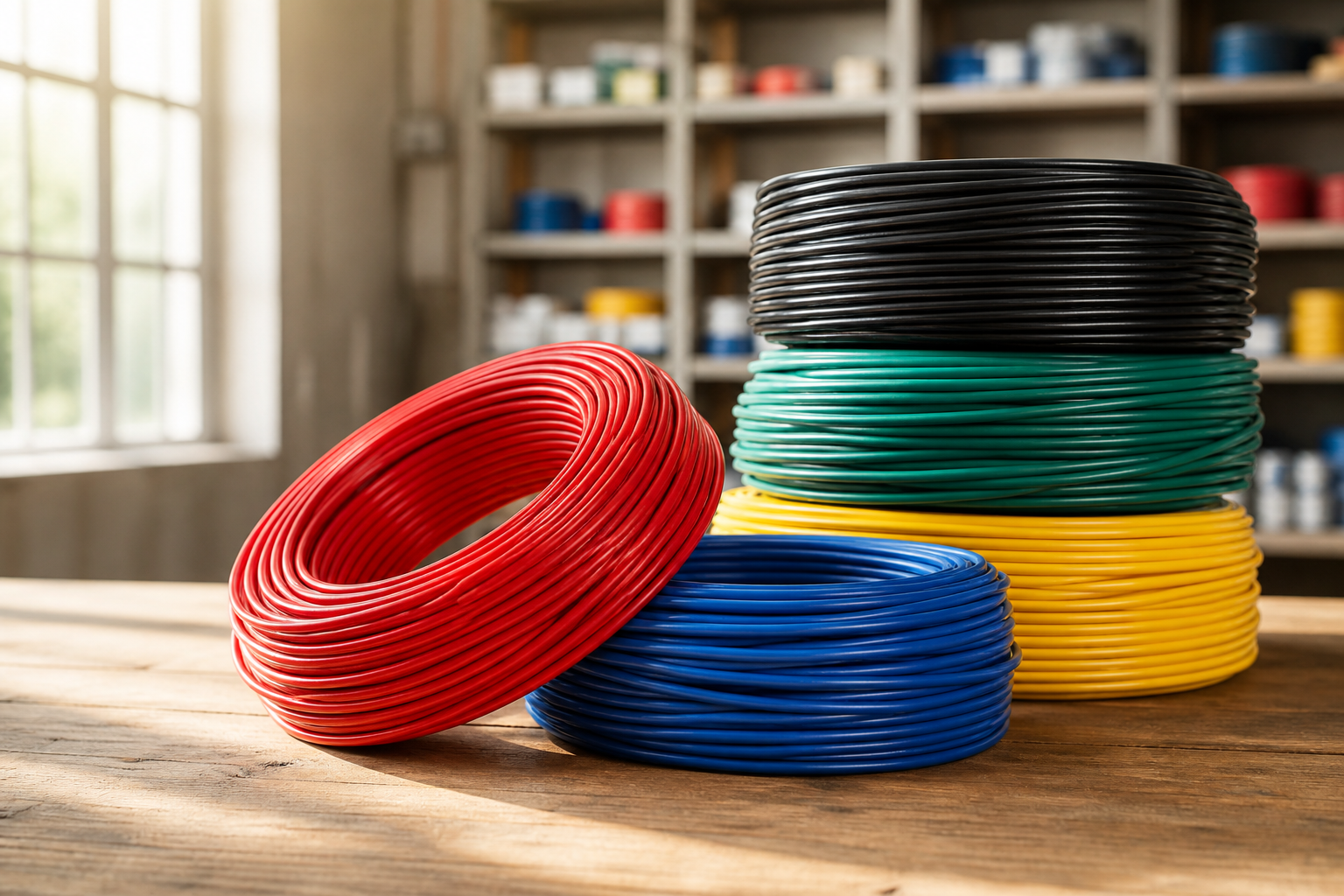
BV stands for copper conductor, PVC insulated wire — the standard fixed-installation wiring in the Chinese national standard system.
Decoding the name:
- B = fixed wiring (布电线, “installation wire”)
- V = PVC insulation
It complies with GB/T 5023.3 (equivalent to IEC 60227-3), with a common rated voltage of 450/750V; the international code is 227 IEC 01 (BV).
In one sentence: BV is a single copper conductor with one layer of PVC insulation and no outer jacket — it relies on conduit, trunking, or cable tray for mechanical protection.
2. Construction of BV Cable
| Layer | Description |
|---|---|
| Conductor | Electrical-grade hard copper; solid (single strand) for small sizes, stranded hard construction for larger sizes |
| Insulation | PVC, single layer, no sheath |
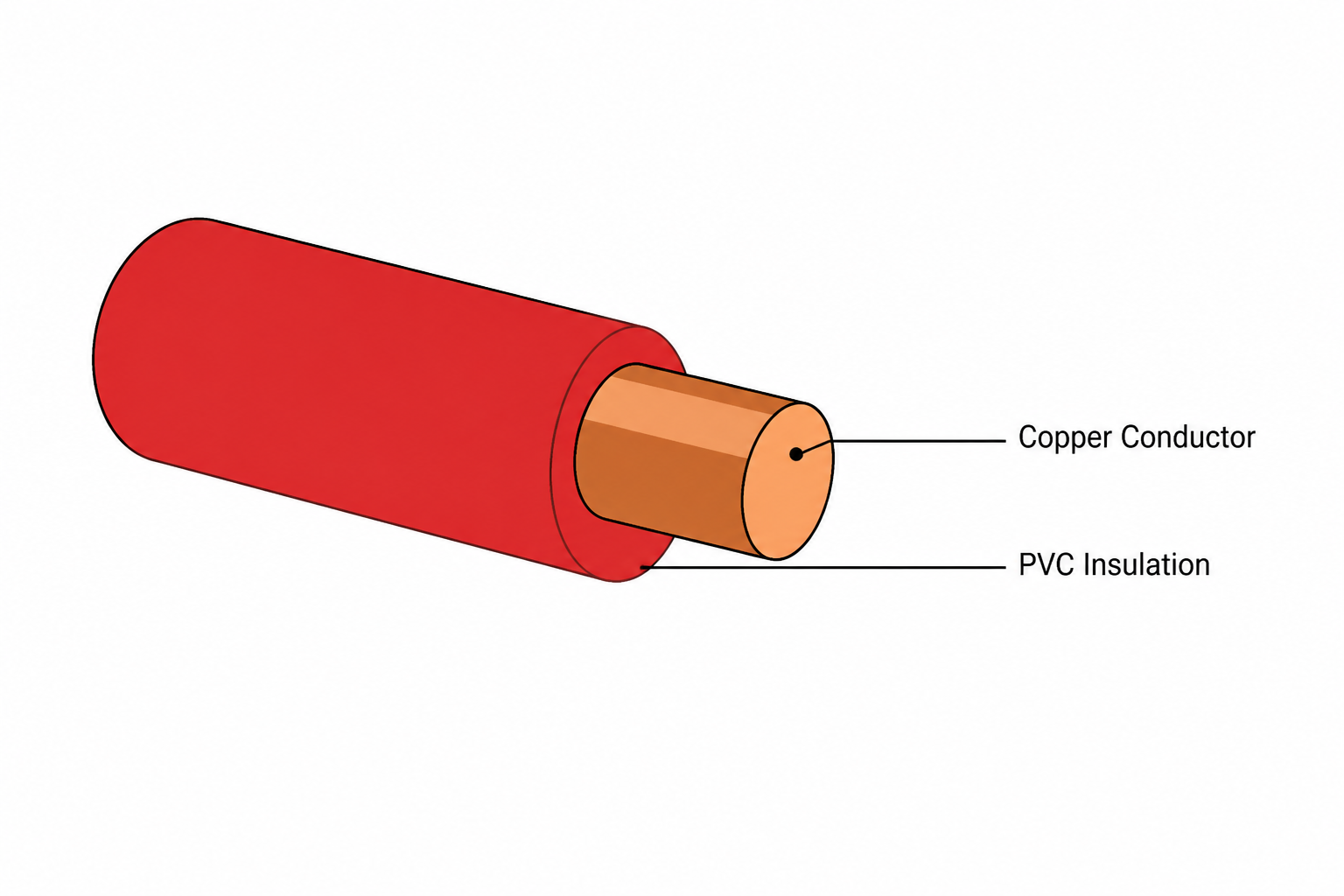
Because the construction is simple, BV offers clear advantages: low cost, stable insulation, flame-retardant PVC, and easy installation — an economical workhorse for high-volume use.
3. BV Family: BVR / BVV / WDZ-BYJ — What’s the Difference?
These are the models most often confused in procurement:
| Model | Full Name | Key Difference | Typical Use |
|---|---|---|---|
| BV | Copper conductor, PVC insulated wire | Single insulation, rigid conductor | Fixed installation in conduit: home/commercial circuits |
| BVR | Copper conductor, PVC insulated flexible wire | Conductor is fine-stranded copper, more flexible | Where bending or many conduit bends are involved |
| BVV | Copper conductor, PVC insulated & sheathed cable | Adds an outer PVC sheath | Damp areas, surface mounting (e.g., kitchens, bathrooms) |
| WDZ-BYJ | Low-smoke halogen-free XLPE insulated wire | Halogen-free + higher temperature XLPE insulation | Schools, hospitals, subways — high-safety locations |
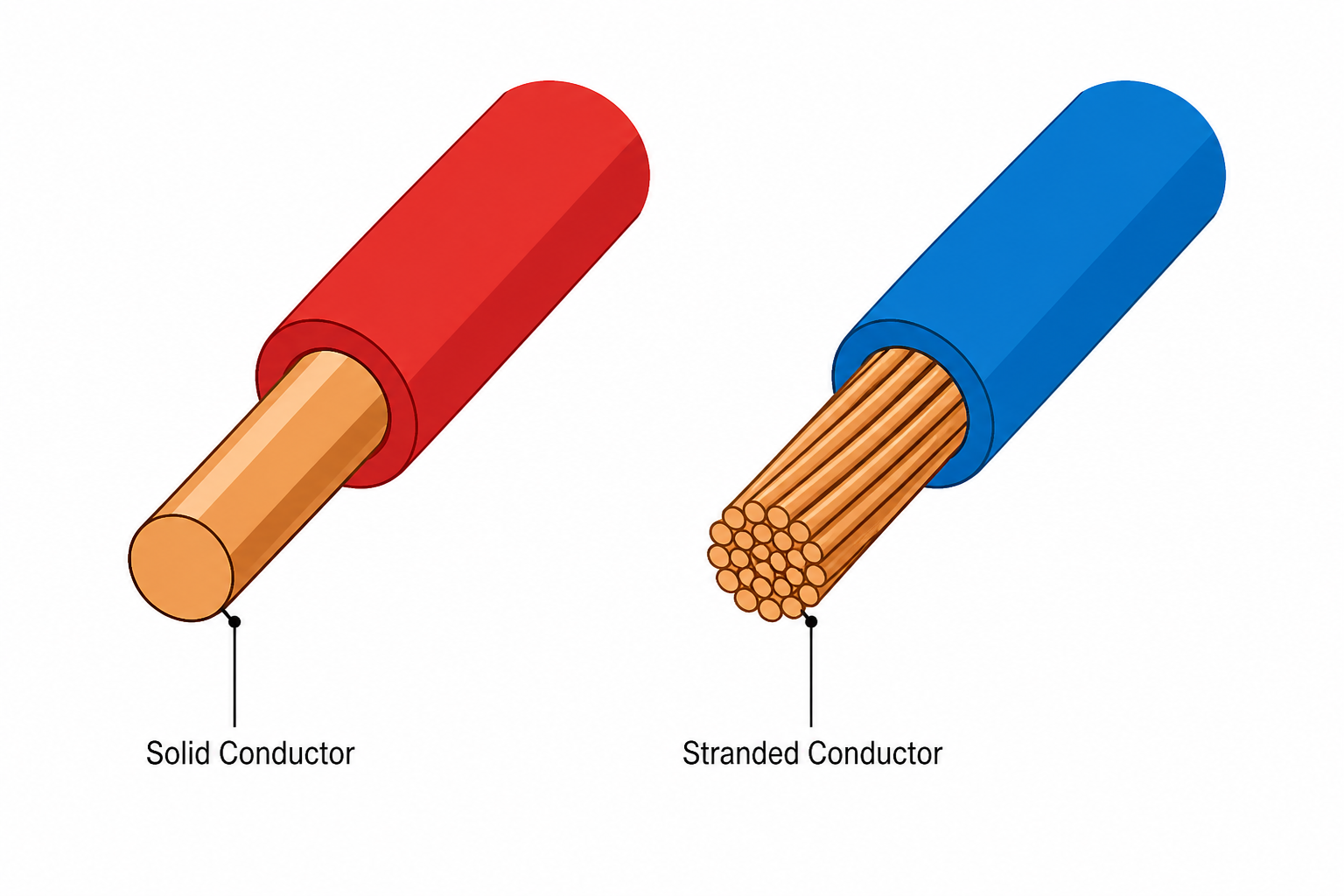
Memory tip: R = flexible (stranded), the second V = has an outer sheath, WDZ = halogen-free / low smoke.
4. Main Applications of BV Cable
- Home renovation: lighting, socket, and air-conditioning circuits run in conduit
- Commercial & office buildings: distribution feeders and branch circuits
- Industrial facilities: fixed power supply lines for equipment
- Panel / distribution board internal wiring
Typical sizing practice for home circuits (reference only — always calculate from the actual load): lighting 1.5 mm², general sockets 2.5 mm², air-conditioning / kitchen high-power 4 mm², main incoming line 6–10 mm².
5. 5 Questions Before You Spec BV
- BV or BVR? For fixed conduit runs, BV wins on cost and stability; choose BVR where flexibility or many bends matter.
- What cross-section? Size from the load current using standard ampacity tables (e.g., IEC 60364 / GB/T 16895), with margin — never size from the nameplate power alone.
- Do you need flame-retardant or fire-resistant? Standard BV PVC is self-extinguishing; for fire-critical circuits choose ZC-BV (flame-retardant) or NH-BV (fire-resistant).
- Strict environmental requirements? Choose WDZ-BYJ (low smoke, zero halogen) for schools, hospitals, subways — low smoke and no halogen gas when burned.
- Export equivalents? BV belongs to the IEC 60227 family: in Europe it corresponds to 227 IEC 01 / H07V-U (solid) and H07V-R (stranded); in the US, THHN/THWN building wire is the functional equivalent. Always verify target-market certification (CE, UL, etc.) before shipping.
6. Common Mistakes to Avoid
- ❌ Using BV outdoors — no jacket means no UV/rain resistance; outdoor runs need conduit or weather-resistant cable.
- ❌ Direct burial of BV — single insulation cannot withstand moisture or mechanical damage; use sheathed/armored waterproof cable for burial.
- ❌ BV for trailing/moving equipment — rigid conductor breaks under repeated flexing; use flexible RV or rubber-sheathed cable instead.
- ❌ Joints inside conduit — never splice inside a conduit run; keep joints in accessible junction boxes.
- ❌ Price over certification — unmarked or uncertified wire (3C for China, or target-market marks) fails inspection and is unsafe.
7. FAQ
Q1: Is BV wire flame-retardant?
A: PVC insulation is self-extinguishing by nature. Where a defined retardant/fire rating is required, specify ZC-BV or NH-BV.
Q2: BV or BVR — which is better?
A: No absolute winner. BV offers better value for fixed conduit runs; BVR lasts longer where flexibility and frequent bending are needed.
Q3: How long does BV wire last?
A: Under normal environment and load, design life can exceed 20 years; sustained overload and high temperature accelerate insulation aging.
Q4: What does 450/750V mean?
A: Rated voltage U0/U = 450/750V — 450V phase-to-earth, 750V phase-to-phase AC — covering the vast majority of low-voltage distribution applications.
Conclusion
Simple in construction, broad in application, and highly cost-effective — BV is one of the most reliable building blocks of building electrical systems. Understanding the model names and installation limits helps you buy right the first time.
Sourcing BV / BVR / BVV building wire? Contact our team for datasheets, samples, custom flame-retardant / fire-resistant / LSZH options, and target-market certification support.